

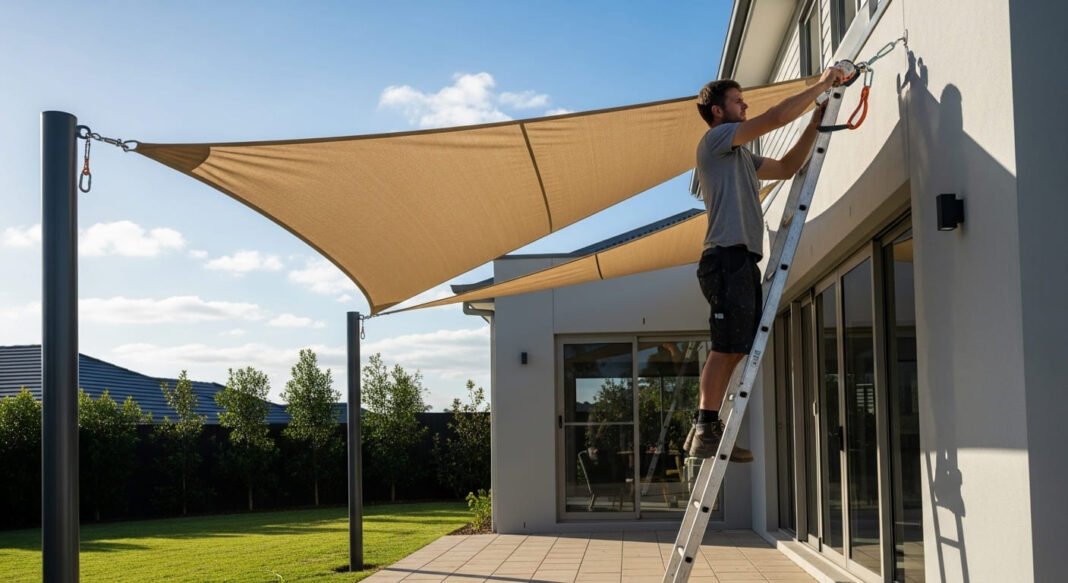
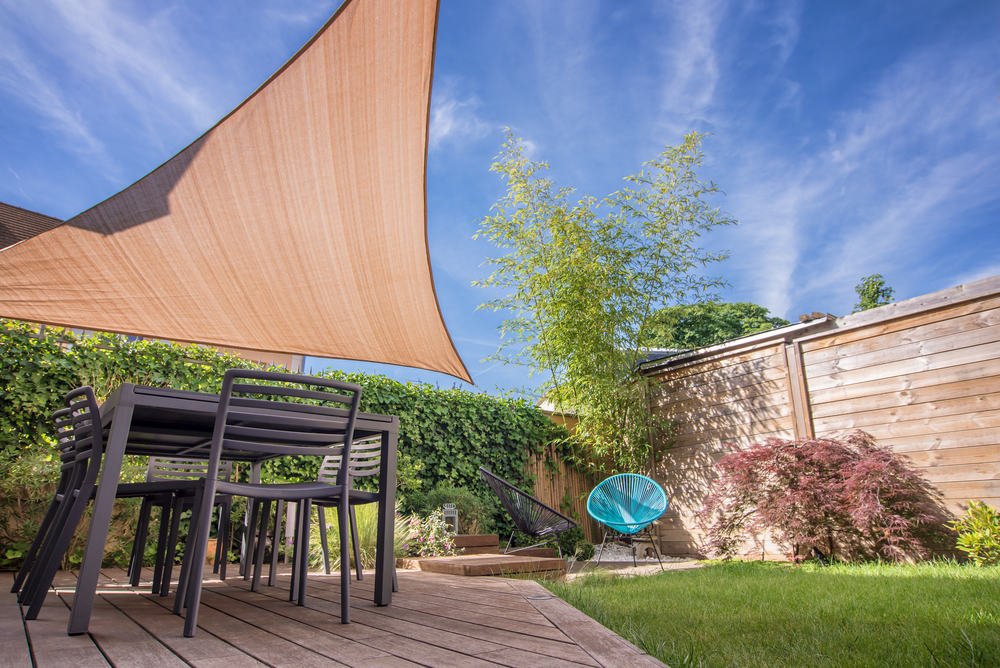
Waterproof shade sails are tensioned PVC fabric canopies engineered to block 100% of UV and shed rain, providing dry, shaded cover over outdoor dining, commercial entries, pools and carports year-round. In Australia they are chosen where standard porous shade cloth is not enough and a full roof structure is not desired.
Key takeaways
- Waterproof shade sails require a minimum 20-degree pitch to allow water run-off.
- PVC or laminated HDPE fabrics are used for waterproof applications.
- Insufficient pitch causes water pooling that can tear the fabric.
- Waterproof sails are significantly more expensive than standard breathable shade sails.
- AS 1170 wind-load engineering is essential for proper structural support.
- Professional installation ensures proper tensioning and anchor design.
What Is a Waterproof Shade Sail and How Does It Work?
A waterproof shade sail is made from PVC-coated polyester fabric (typically 650-900 gsm) tensioned across steel posts and fixings. Unlike porous HDPE shade cloth that allows water and air through, waterproof PVC is fully impervious – it blocks 100% UV and sheds rain. The critical design element is shape: a waterproof sail must be engineered with enough pitch or twist (a hypar / hyperbolic-paraboloid shape) that water runs off to a defined low point and cannot pool. Pooling water weighs 1 kg per litre and can rip a sail or pull a post down. A properly engineered waterproof shade sail uses high-tension fixings (often 6-10 mm stainless chain or turnbuckles), structural steel posts, and a designed drainage path to a gutter, downpipe or splash zone.
Do waterproof shade sails handle heavy rain?
Yes, waterproof shade sails made from PVC or HDPE laminated fabrics handle heavy rain when installed with adequate pitch — typically 20 degrees or more — to allow water run-off. Without sufficient pitch, water pools on the fabric, causing sagging, stretching and eventual tearing under the weight of pooled water.
How Much Does a Waterproof Shade Sail Cost in Australia?
Indicative 2026 Australian pricing (supply and install): small waterproof sail (15-25 m2, residential patio or entry) $2,800-$5,500; medium (25-50 m2) $5,000-$9,500; large (50-100 m2) $8,500-$18,000; commercial multi-sail waterproof installation (100 m2+) $15,000-$45,000+. Waterproof PVC sails cost roughly 60-100% more than equivalent HDPE shade cloth sails, because the fabric is heavier, the tensioning hardware is heavier, and the engineering requirements are stricter. Free-standing installations with new steel posts add $500-$1,200 per post installed and concreted. Commercial installations over 50 m2 typically require engineering certification.
What PVC Fabric Grade Should You Choose?
Waterproof sail fabric ranges from 550 gsm entry-grade PVC to 900+ gsm commercial heavy-duty PVC. Heavier fabric resists tearing, lasts longer, and carries a longer warranty (10-15 years for premium grades vs 5-8 years for entry-grade). Premium brands include Ferrari 502, Mehler Valmex and Sattler, all of which carry independent UV and fire-resistance testing. Look for fabric that is B1 fire-rated (DIN 4102) for commercial installations, has a Teflon or acrylic topcoat for self-cleaning and mould resistance, and is warranted for at least 10 years. Avoid unbranded PVC – it fades, becomes brittle and tears within 3-5 years in Australian sun.
Are waterproof shade sails more expensive than standard shade sails?
Yes, waterproof shade sails are more expensive than standard breathable shade sails because they use heavier PVC or laminated HDPE fabrics, require stronger tensioning hardware, and need greater structural support to handle the additional wind and water loads. Expect to pay 30-60% more for equivalent coverage area.
How Is Water Drainage Engineered on a Waterproof Sail?
Water drainage is the make-or-break design element. A waterproof sail must be installed with sufficient fall (minimum 1:4, ideally steeper) toward a designed low point where water can shed to a gutter, downpipe or splash zone. The hypar (twisted) shape – high at one diagonal corner, low at the opposite – is the standard approach because it creates a continuous fall and looks clean. Flat or low-pitch waterproof sails will pool water, sag, and ultimately fail. For sails attached to a building, integrate a gutter at the low edge to direct water to a downpipe. For free-standing sails, the low point should shed to a garden bed or gravel trench. A reputable installer designs the fall and the drainage path before fabricating the sail – not after.
What Wind Load Must a Waterproof Sail Withstand?
Waterproof sails catch more wind than porous shade cloth because they don’t let air through. Engineering to Australian wind standards (AS/NZS 1170.2) is mandatory for any commercial installation and recommended for residential sails over 20 m2. Wind Region A (most of Australia) design wind speed is around 41 m/s (Region A1) up to 50 m/s in exposed coastal Region C. Engineering involves: steel post sizing to the wind load and sail area; concrete footing depth and diameter to resist overturning; fabric and seam strength to resist tearing at high tension; and stainless-steel fitting sizing to the load. An engineered waterproof sail in Australia typically withstands wind gusts to 130-160 km/h – above which the sail should be removed or furled if it is a seasonal installation.
How Long Do Waterproof Shade Sails Last and How Are They Maintained?
A premium-grade waterproof PVC sail, properly engineered and installed, lasts 10-20 years. Fabric topcoat (Teflon or acrylic) keeps the surface clean and mould-resistant for the first 7-10 years; after that, the surface may need re-treating. Maintenance: clean twice a year with mild soap and a soft brush, working from the high point down to flush debris toward the drainage point; never pressure-wash (it strips the topcoat); check and re-tension turnbuckles annually; inspect all stainless fittings for corrosion and chafing every 2-3 years; clear the drainage path of leaves and debris. In cyclone and severe-storm regions, plan to remove or furl the sail before named wind events. Most premium sails carry a 10-15 year pro-rata fabric warranty.
Frequently Asked Questions
How much does a waterproof shade sail cost in Australia?
Indicative 2026 installed pricing: small residential (15-25 m2) $2,800-$5,500; medium (25-50 m2) $5,000-$9,500; large (50-100 m2) $8,500-$18,000; commercial installations $15,000-$45,000+. Waterproof PVC costs 60-100% more than HDPE shade cloth.
What is the difference between a shade cloth and waterproof sail?
HDPE shade cloth is porous, blocks 90-99% UV, allows airflow and is cheaper. Waterproof PVC blocks 100% UV and is fully waterproof but costs more, requires heavier engineering and tensioning, and must be installed with sufficient fall to prevent water pooling.
How is water prevented from pooling on a waterproof sail?
The sail must be installed with minimum 1:4 fall (ideally steeper) toward a designed low point, usually using a hypar (twisted) shape with high and low diagonal corners. Flat or low-pitch sails will pool water, sag and fail. A gutter or splash zone is engineered at the low edge.
How long does a waterproof shade sail last?
A premium-grade PVC sail properly engineered and installed lasts 10-20 years. Premium brands (Ferrari 502, Mehler Valmex, Sattler) carry 10-15 year pro-rata warranties. Clean twice yearly, re-tension annually, and remove before severe wind events.
Do waterproof shade sails need engineering?
Yes for any commercial installation or residential sail over 20 m2. Engineering to AS/NZS 1170.2 sizes steel posts, footings, fabric and fittings to the regional wind load. An engineered sail typically withstands wind gusts to 130-160 km/h.
Conclusion
Waterproof shade sails extend outdoor usability through rain and shine by combining PVC or laminated HDPE fabrics with engineered structural support. Specify adequate pitch, verify AS 1170 wind-load engineering, and engage an experienced installer for tensioning and anchor design. Properly specified, waterproof sails deliver year-round weather protection, lift outdoor comfort and create usable entertainment areas regardless of seasonal conditions.