

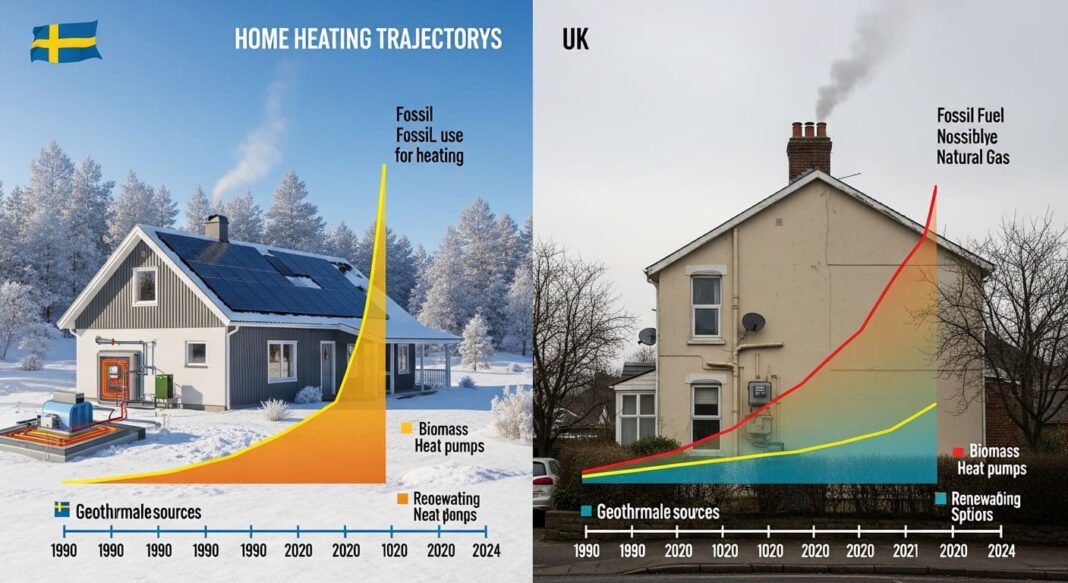
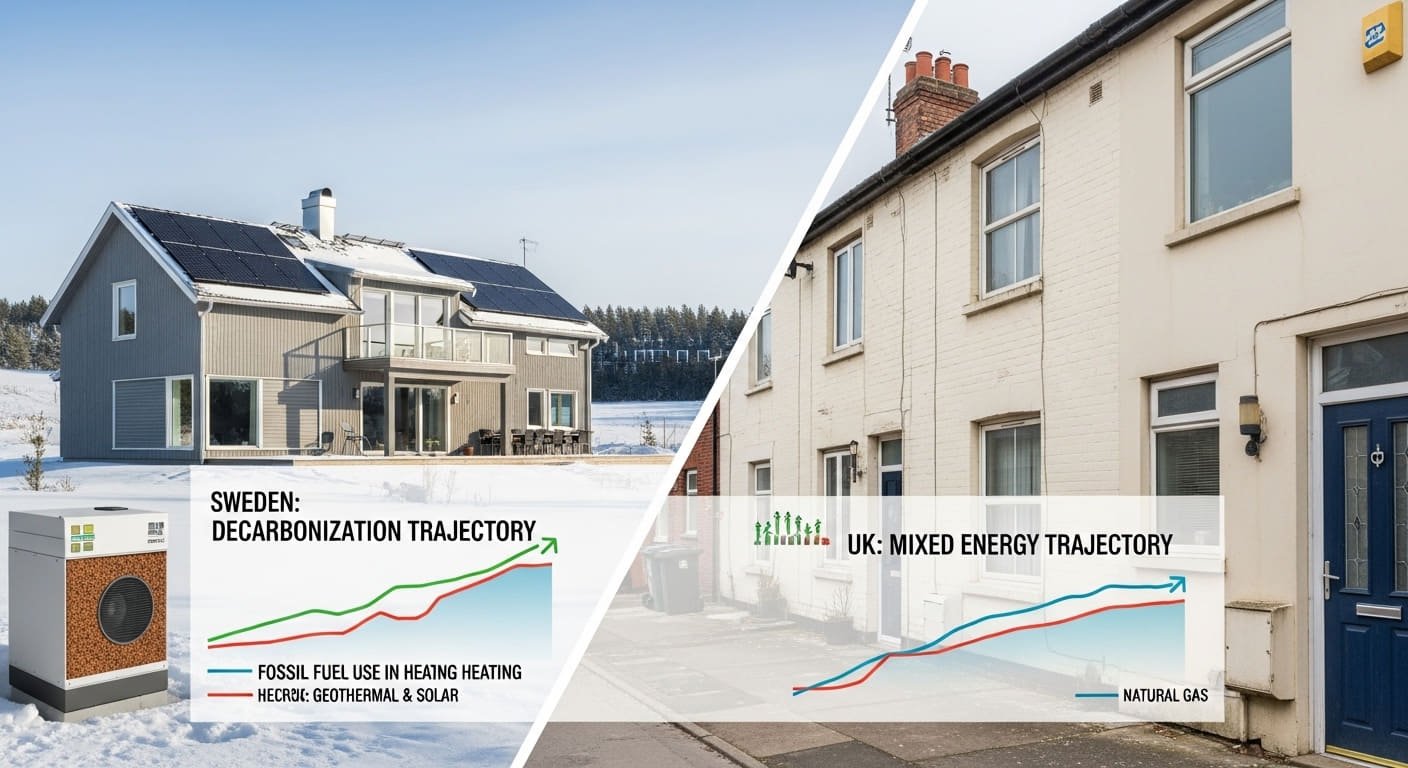
When we look at how different nations keep their homes warm, we uncover a fascinating story of history, geology, and policy. It is not merely about turning a dial on a wall; it is about how infrastructure shapes our daily comfort. Two of the most interesting case studies in the Western world are the United Kingdom and Sweden. These two nations share similar climates in many respects—long, dark winters and a need for reliable warmth—yet they have taken vastly different paths to achieve thermal comfort. Comparing home heating trajectories in Sweden and the UK reveals a roadmap of where energy efficiency has been and where it might be going.
For homeowners looking to improve their own living spaces, understanding these differences offers valuable lessons. Whether you are planning a renovation or simply want to understand why some houses stay warm while others lose heat, looking at these two distinct approaches provides clarity.
The Historical Divide: Gas vs. The Oil Crisis
To truly understand the current state of housing, we have to look back at the mid-20th century. This is where the roads diverged.
The UK’s Reliance on Gas
For decades, the United Kingdom has relied heavily on natural gas. With the discovery of abundant gas reserves in the North Sea, the UK built a massive infrastructure network to pipe this cheap fuel directly into millions of homes. The “combi boiler” became the standard. It was easy, affordable, and the infrastructure was already in the ground. Because energy was cheap, there was less immediate pressure to insulate homes to a high standard. This legacy has left the UK with some of the oldest and least efficient housing stock in Europe.
Sweden’s Pivot Away from Oil
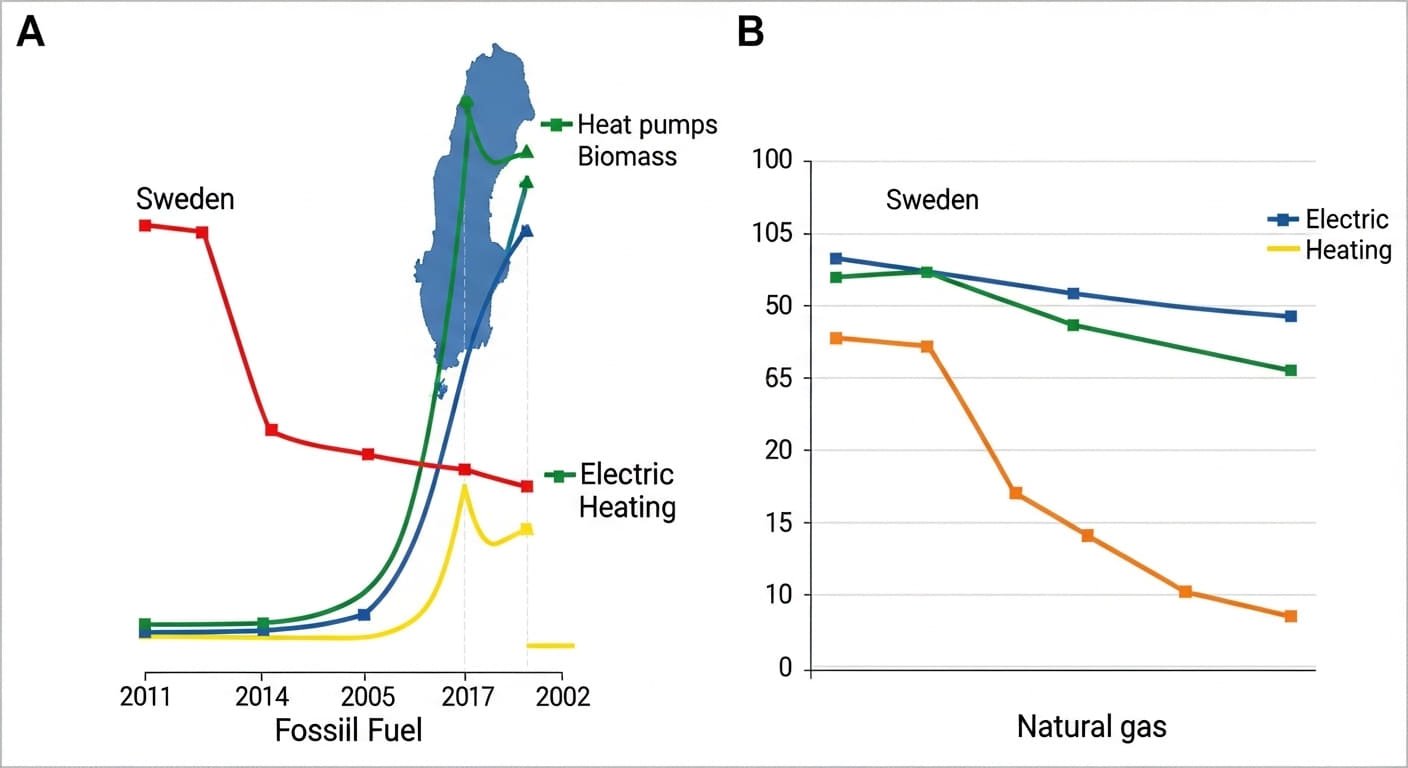
Sweden faced a different reality. Before the 1970s, they relied heavily on oil. When the oil crisis hit, the country was vulnerable. The government made a decisive choice to shift away from imported fossil fuels. They invested heavily in district heating (where heat is generated centrally and pumped to homes) and electric heating solutions. Because energy became a precious commodity, they simultaneously enforced strict building codes regarding insulation.
When comparing home heating trajectories in Sweden and the UK, this historical moment is the key turning point. One nation leaned into a cheap, available resource, while the other was forced to innovate due to scarcity.
Building Fabric: The First Line of Defense
You cannot talk about heating without talking about retaining that heat. This is where the concept of “fabric first” comes into play.
The Swedish Standard
In Sweden, a house is built like a thermos. Triple glazing is not a luxury; it is a standard expectation. Walls are thick, packed with insulation, and designed to eliminate thermal bridges where heat can escape. The construction industry there prioritizes airtightness. This means that once the house is warm, it stays warm with very little additional energy input.
The British Challenge
In contrast, the UK struggles with “leaky” homes. Many properties date back to the Victorian or Edwardian eras. While these homes are beautiful and full of character, they were designed to breathe, relying on coal fires to draw air through chimneys. Retrofitting these homes to modern standards is difficult and expensive. Single or double glazing is still common, and drafts are a accepted part of life for many.
When comparing home heating trajectories in Sweden and the UK, we see that the UK is currently trying to play catch-up with insulation programs, whereas Sweden has baked these standards into their culture for forty years.
The Rise of the Heat Pump
If you follow home improvement trends, you know that heat pumps are the current hot topic.
Sweden’s Mature Market
Sweden is a global leader in heat pump adoption. Because they moved away from gas decades ago, and because their electricity generation is largely low-carbon (hydro and nuclear), heat pumps made perfect sense. You will find Ground Source Heat Pumps (GSHP) and Air Source Heat Pumps (ASHP) in a vast number of detached Swedish homes. The market is mature, installers are experienced, and the technology is trusted by the public.
The UK’s Transition
The UK is in the early stages of this transition. The government is pushing for heat pumps to replace gas boilers to meet environmental targets. However, there are hurdles. The cost of electricity relative to gas in the UK has historically been high, which can make the running costs of a heat pump higher if the system is not designed perfectly. Furthermore, because UK homes are less insulated, heat pumps (which run at lower temperatures) have to work harder to maintain comfort.
Comparing home heating trajectories in Sweden and the UK highlights a crucial lesson: technology works best when the building envelope is ready for it. Putting a modern heat pump in a drafty, uninsulated house is often a recipe for high bills and cold rooms.
District Heating: The Community Approach
Another major differentiator is how heat is delivered in urban areas.
- Swedish Networks: In Swedish cities, it is rare for an apartment block to have individual boilers. Instead, they connect to a district heating network. Waste heat from industries, data centers, or biomass plants heats water that circulates through the city. It is efficient and removes the maintenance burden from the individual homeowner.
- UK Independence: The UK has very few district heating networks, though they are growing in new developments in London and other major cities. The British culture of home improvement has traditionally favored individual control—”my home, my boiler.” Shifting this mindset toward communal energy networks is a slow process.
What This Means for Your Home Improvement
Why does comparing home heating trajectories in Sweden and the UK matter to you, perhaps living in a completely different region? It matters because it shows what works.
If you are planning a renovation, look to the Swedish model of “fabric first.” Before you buy a fancy new heater, invest in:
- High-quality windows (double or triple glazed).
- Draft-proofing around doors and floors.
- Roof and wall insulation.
By doing this, you reduce the load on whatever heating system you choose. You can learn from the UK’s current struggle: do not rely on a powerful heater to mask the problems of a leaky house. Fix the leak first.
The Future Trajectory
The UK is actively trying to mirror the Swedish trajectory, albeit decades later. Grants for heat pumps, tighter regulations for rental properties, and a push for better insulation are all in motion. Sweden, meanwhile, is refining its systems, looking at smart grids and even more efficient ways to use waste heat.
For the savvy homeowner, the takeaway is clear. The future of home value is tied to energy efficiency. Homes that mimic the high-performance standards seen in Scandinavia will hold their value better, cost less to run, and provide a superior level of comfort.
Questions and Answers: Common Questions About Comparing home heating trajectories in Sweden and the UK in Australia
Q: How does the climate difference affect comparing home heating trajectories in Sweden and the UK?
While Sweden is significantly colder in the winter, their homes often feel warmer indoors than those in the UK. This is because Swedish homes are designed to retain heat. The UK has a milder, damper climate, but due to poor insulation, the indoor environment can feel colder and draftier. This proves that building standards are often more important than the weather outside when determining comfort.
Q: Why is the UK moving away from gas boilers now?
The UK is moving away from gas primarily to meet carbon reduction targets. Like the shift Sweden made in the 70s away from oil, the UK is now pivoting to electricity (heat pumps) because the electrical grid is becoming greener with wind and solar power. Continuing to burn gas in millions of individual homes is no longer seen as sustainable for the long term.
Q: Can I apply Swedish insulation standards to an older home?
Yes, but it requires careful planning. You cannot simply seal up an old Victorian house completely without adding ventilation, or you risk mold and dampness. The Swedish approach uses “mechanical ventilation with heat recovery” (MVHR) systems. If you want to achieve Swedish levels of airtightness in an older home, you must also install adequate ventilation systems to keep the air fresh.
Q: Is district heating viable in low-density housing areas?
Generally, district heating works best in dense urban environments where pipes do not have to travel far between buildings. This is why it is so popular in Swedish cities with apartment blocks. In the UK (and places like Australia) where suburban sprawl and detached housing are common, individual heat pumps are often a more practical and cost-effective solution than digging up roads to lay district heating pipes.
Q: What is the biggest lesson for Australian homeowners from this comparison?
The biggest lesson is that insulation is the best investment you can make. Australian homes, much like older UK homes, are often built with little regard for thermal retention. By looking at how Sweden builds, Australian homeowners can see that investing in windows and insulation pays off in comfort and lower cooling/heating bills, regardless of whether you are fighting the heat or the cold.