

Have you noticed your doors sticking lately? Perhaps your floors feel uneven when you walk across them, or you’ve spotted some concerning cracks in your walls? If you’re an Australian homeowner living in a raised house, these signs might point to a problem lurking beneath your floorboards – your house stumps.
House stump replacement isn’t something most of us think about until it becomes absolutely necessary. Yet, getting this work done properly can make a massive difference to your home’s structural integrity and your family’s safety. The good news? With the right preparation, the whole process can run smoothly without turning your life upside down.
In this guide, we’ll walk you through everything you need to know about preparing your home for restumping. From understanding what house stumps actually do, to spotting the warning signs that yours need replacing, and getting your property ready for the contractors – we’ve got you covered. Whether you’re a first-time homeowner or you’ve been through this before, these practical steps will help you feel confident and prepared for what’s ahead.
Understanding House Stumps and Their Role in Your Home
What Are House Stumps?
House stumps are the vertical supports that hold your home above the ground. Think of them as your house’s legs – they transfer the entire weight of your structure down to the foundations. In Australia, raised homes are particularly common in Queensland, New South Wales, and Victoria, making stumps a critical component for millions of properties.
Common Types of Stumps Used in Australian Homes
You’ll typically find three main types of stumps in Australian homes. Timber stumps were the traditional choice, often made from hardwood like red gum or ironbark. Concrete stumps became popular from the mid-20th century onwards, offering better resistance to moisture and pests. Steel stumps are the modern favourite, providing excellent durability and adjustability.
How Long Do House Stumps Last?
Timber stumps generally last between 15 to 40 years, depending on the wood type and soil conditions. Concrete stumps can serve you well for 50 to 80 years, while steel stumps often come with warranties of 50 years or more. However, factors like soil movement, drainage issues, and termite activity can significantly shorten these lifespans.
Warning Signs Your Home Needs Restumping
How Do I Know If My House Needs Restumping?
Spotting the early warning signs can save you thousands in repair costs down the track. Keep an eye out for these telltale indicators:
- Doors and windows that stick or won’t close properly
- Visible cracks in walls, particularly around door frames
- Uneven or bouncy floors
- Gaps appearing between walls and ceilings
- Your house feeling like it’s leaning to one side
If you’re noticing several of these issues, it’s time to get a professional inspection. A qualified restumping contractor can crawl under your home and assess the condition of each stump individually.
What Happens If You Don’t Replace Damaged Stumps?
Ignoring damaged stumps is a bit like ignoring a toothache – it only gets worse. Over time, failing stumps can cause severe structural damage, including cracked walls, damaged plumbing, and even roof problems. The longer you wait, the more expensive the repairs become. In extreme cases, homes have been deemed unsafe for occupation.
Pre-Replacement Preparation: Getting Your Home Ready
Clearing the Area Around Your Home’s Perimeter
Before the contractors arrive, you’ll need to clear access around your home’s perimeter. This means moving outdoor furniture, pot plants, garden ornaments, and any stored items away from the house. Aim for at least a two-metre clearance zone on all sides where possible.
Remove any items stored under the house as well. Old paint tins, gardening equipment, and forgotten boxes all need to come out. This gives the workers clear access to every stump and makes the job safer for everyone.
Arranging Access for Contractors and Equipment
Restumping equipment isn’t small. You’ll need to make sure there’s adequate access for vehicles and machinery. This might mean parking your car elsewhere, removing gates temporarily, or clearing a pathway through your yard.
Chat with your contractor beforehand about their specific access requirements. Some jobs might need a small excavator or concrete pump, which require solid ground to operate on.
Protecting Your Garden and Landscaping
Your beautiful garden might take a bit of a beating during restumping, but you can minimise the damage with some preparation. Consider transplanting precious plants to a temporary location. Lay down protective boards or plastic sheeting over lawn areas that will see heavy foot traffic.
Securing Pets and Making Arrangements for Children
The worksite will be noisy, dusty, and potentially dangerous. Arrange for pets to stay with friends, family, or in a boarding facility during the work. Kids should also be kept well away from the action – perhaps organise playdates or activities away from home.
Inside Your Home: Essential Steps Before Work Begins
Removing Fragile Items and Valuables
Restumping involves jacking up your house, which can cause vibrations throughout the structure. Pack away breakable items like glassware, ornaments, and framed photos. Remove items from high shelves and secure anything that could topple.
Valuable electronics should be disconnected and moved to a safe location. This includes televisions, computers, and sound systems. It’s also wise to take photos of your home’s interior before work begins – just in case you need documentation later.
Disconnecting Utilities: What You Need to Know
Your contractor will advise you about utility disconnections. In most cases, you’ll need to have gas and electricity disconnected or isolated during certain phases of the work. Plumbing may also need attention, particularly if pipes run near the stumps being replaced.
Contact your utility providers well in advance to arrange temporary disconnections. This typically takes at least a week to organise, so don’t leave it until the last minute.
Do I Need to Move Out During House Restumping?
This depends on the extent of the work and your personal comfort level. Many homeowners stay in their homes during restumping, though you’ll experience some disruption. If you have young children, elderly family members, or anyone with health concerns, staying elsewhere might be more sensible.
Most contractors can work in sections, allowing you to maintain access to essential areas like bedrooms and bathrooms. Discuss your situation with your contractor to find an arrangement that works for everyone.
Hiring the Right Restumping Contractor
What to Look for in a Professional Restumping Service
Choosing the right contractor makes all the difference. Look for a company with proper licensing and insurance – this protects you if anything goes wrong. Check their experience specifically with restumping, not just general building work.
Read online reviews and ask for references from recent jobs. A reputable contractor will happily provide these. Plus, make sure they offer a written warranty on their work.
Questions to Ask Before Signing a Contract
Before committing, ask these important questions:
- How many stumps need replacement?
- What type of replacement stumps do you recommend?
- How long will the job take?
- What happens if you discover additional problems?
- Is the quote fixed, or could costs increase?
Get everything in writing, including timelines, payment schedules, and warranty details.
How Much Does House Restumping Cost in Australia?
Costs vary significantly depending on your location, the number of stumps, accessibility, and stump type. Generally, you’re looking at anywhere from $4,000 to $20,000 or more for a full restump. Individual stump replacement might cost $200 to $500 per stump.
Always get at least three quotes to compare. The cheapest option isn’t always the best – consider the company’s reputation and the quality of materials they use.
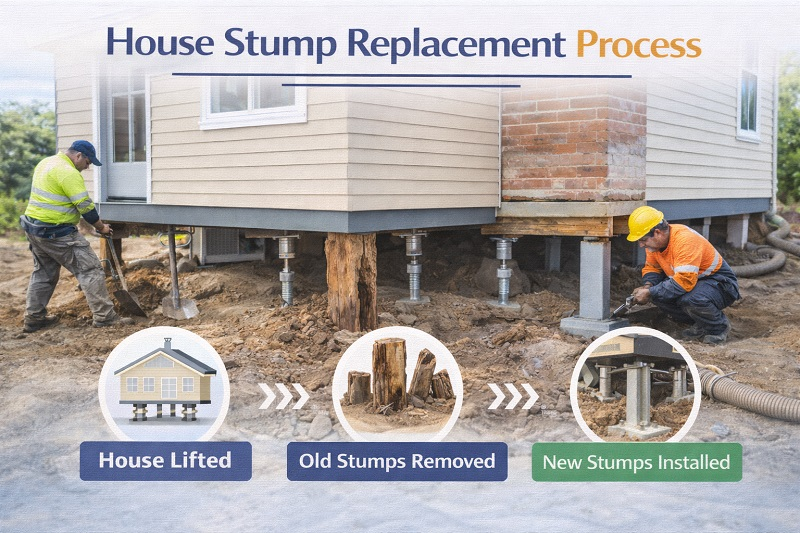
What to Expect During the Restumping Process
How Long Does House Stump Replacement Take?
A typical full restump takes between three to five days for an average-sized home. Partial restumping or individual stump replacement might only take one or two days. Factors like weather, accessibility issues, and unexpected problems can extend these timeframes.
Will Restumping Damage My Home?
When done by experienced professionals, restumping shouldn’t cause significant damage. You might notice some minor cracking in plaster or paintwork as your house settles into its new position. These cosmetic issues are normal and easily fixed.
Post-Replacement: Inspecting and Settling Back In
Once the work is complete, do a thorough walkthrough with your contractor. Check that doors and windows open smoothly and floors feel level. Document any concerns immediately while the contractor is still on site.
Give your home a few weeks to settle before addressing any minor cosmetic repairs. Those small cracks often close up on their own as the structure adjusts.
Setting Your Home Up for Long-Term Stability
Setting your home up for house stump replacement does not have to feel overwhelming. With little preparations such as clearing access around the property, protecting your belongings, organising utilities, and working with a reliable contractor, you can make the entire process far smoother and more efficient.
A well-planned house stump replacement is more than just a repair job; it is a long-term investment in the safety and stability of your home. When you prepare properly, contractors can complete the work with fewer delays while you experience minimal disruption to your daily routine.
Although the process may take a few days, the long-term benefits are significant. Strong and properly installed stumps provide the structural support your home needs to remain safe and stable for many years.
By taking these simple steps in advance, your house stump replacement project can be completed with confidence, ensuring your home stands on a solid and reliable foundation for decades to come.