

Commercial buildings experience constant exposure to environmental conditions, daily operations, and heavy use. Over time, these factors can affect the appearance and structural condition of walls, ceilings, and exterior surfaces. One of the most effective ways to protect and maintain commercial properties is through commercial painting.
Commercial painting is more than simply applying color to a building. It plays an important role in protecting surfaces from moisture, weather damage, corrosion, and wear. With the right materials and professional techniques, commercial painting helps extend the life of building structures while maintaining a clean and professional appearance.
For business owners, property managers, and facility operators, understanding the right strategies for commercial painting can ensure long-lasting results and improved building protection.
Understanding the Importance of Commercial Painting
Commercial buildings require stronger and more durable coatings than residential properties. Offices, retail stores, warehouses, hospitals, and educational facilities all experience heavy traffic and environmental exposure.
Commercial painting provides a protective barrier that shields building surfaces from damage caused by sunlight, rain, humidity, and pollution. High-quality paint systems help prevent deterioration while maintaining the building’s visual appeal.
In addition to protection, commercial painting also contributes to a professional environment. Well-maintained buildings create a positive impression for customers, employees, and visitors.
Key Surfaces Protected by Commercial Painting
Commercial painting can be applied to many areas of a property, including both interior and exterior surfaces.
Some commonly painted areas include:
- Exterior building walls
- Interior office walls
- Ceilings and hallways
- Metal structures and railings
- Parking areas and storage facilities
- Industrial floors and equipment
Each of these surfaces requires specific preparation and coating techniques to ensure maximum durability.
Essential Strategies for Long-Lasting Commercial Painting
- Proper Surface Preparation
Surface preparation is one of the most critical steps in commercial painting. Without proper preparation, paint may peel, crack, or fail to adhere correctly.
Professional painters begin by cleaning surfaces thoroughly to remove dirt, grease, and dust. Damaged areas such as cracks or holes are repaired before painting begins.
Preparation may also involve sanding, pressure washing, or applying primer to ensure the paint bonds effectively with the surface.
A well-prepared surface significantly increases the lifespan of commercial paint coatings.
- Choosing High-Quality Paint Materials
The type of paint used in commercial painting has a major impact on durability and protection.
High-quality commercial paints are designed to withstand environmental challenges such as UV radiation, moisture, and temperature fluctuations. Some coatings also provide additional protection against mold, corrosion, and chemical exposure.
Common types of commercial paint coatings include:
- Acrylic coatings for exterior walls
- Epoxy coatings for industrial floors
- Anti-corrosion coatings for metal structures
- Waterproof coatings for exposed surfaces
Using the right materials ensures that the paint continues to protect the building for many years.
- Applying Multiple Protective Layers
A single layer of paint may not provide sufficient protection for commercial buildings. Professional commercial painting projects often involve multiple layers.
These layers typically include:
- A primer layer to improve adhesion
- One or more base coats for color coverage
- A protective topcoat for durability
Multiple layers create a stronger protective barrier that resists damage from weather and daily use.
- Protecting Exterior Building Surfaces
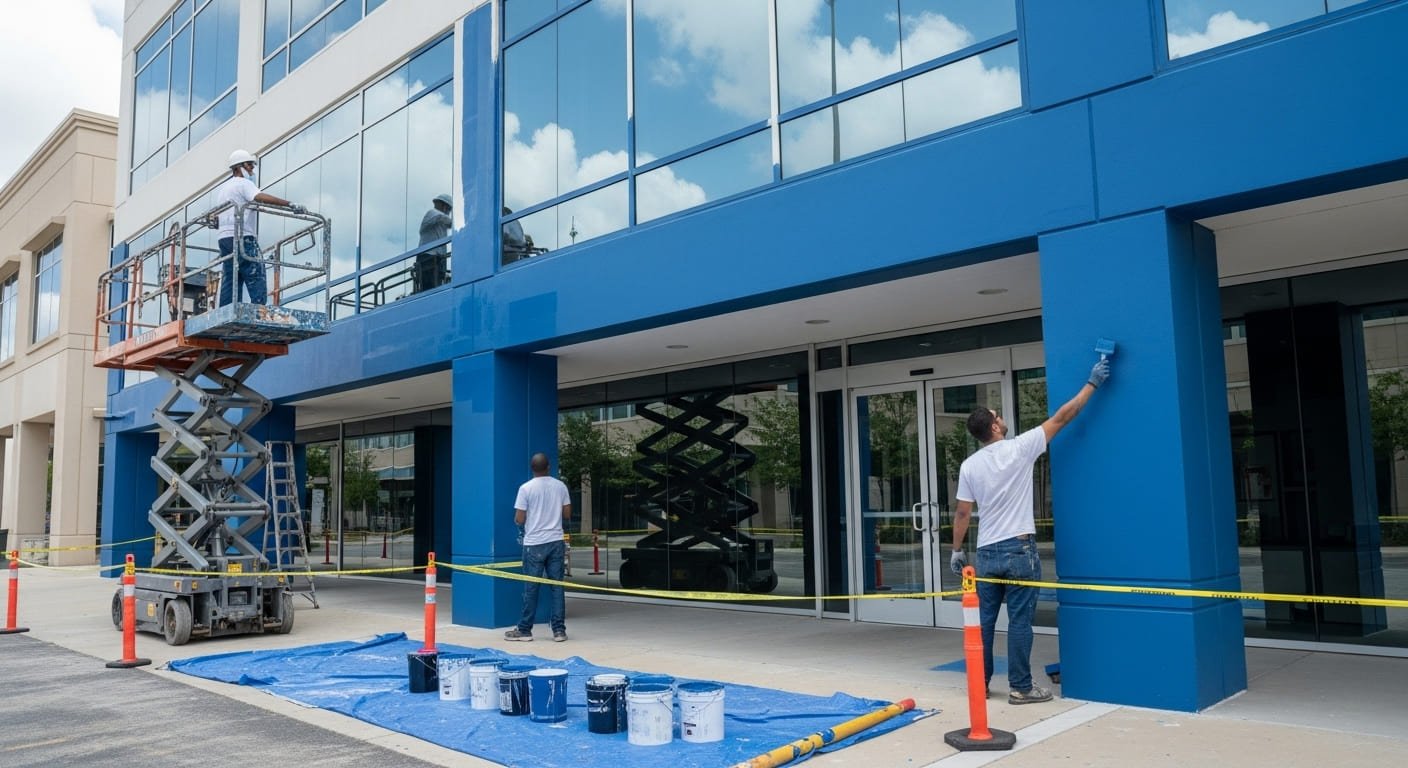
Exterior surfaces are exposed to the most challenging environmental conditions. Sunlight, rain, pollution, and temperature changes can gradually weaken building materials.
Commercial painting strategies for exterior protection include:
- Using UV-resistant coatings
- Applying waterproof sealants
- Selecting weather-resistant paint formulations
- Regularly inspecting surfaces for early signs of damage
These protective measures help maintain building integrity and prevent costly structural repairs.
- Maintaining Interior Spaces
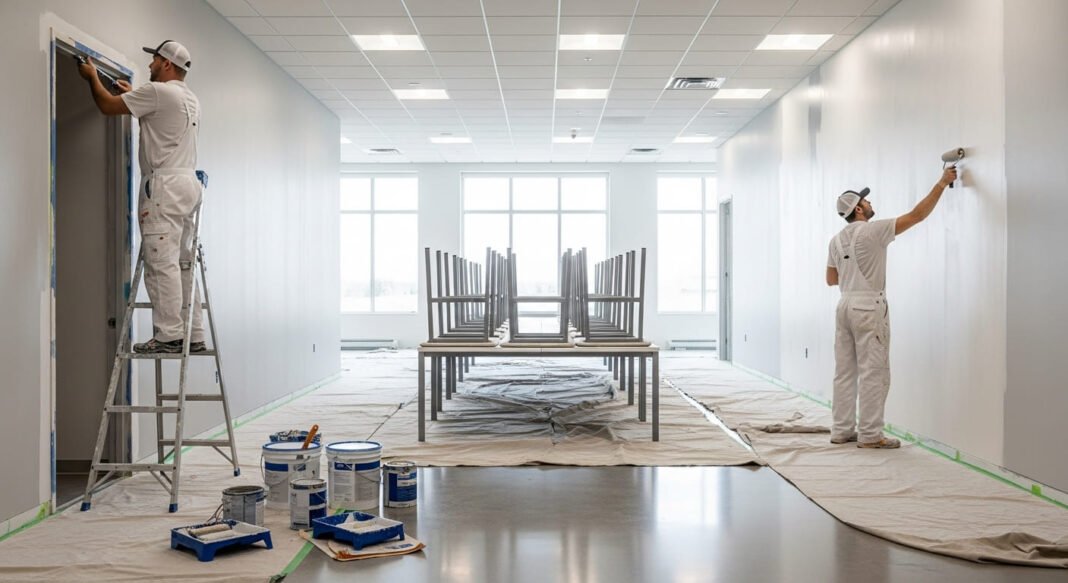
Interior commercial painting is equally important for maintaining building protection and appearance. Walls and ceilings inside offices and facilities often experience wear from foot traffic, furniture movement, and cleaning activities.
Durable interior paint coatings help resist stains, scuffs, and scratches. In environments such as hospitals or kitchens, specialized coatings may also provide antibacterial or moisture-resistant properties.
Maintaining interior paint surfaces helps preserve a clean and professional working environment.
Benefits of Professional Commercial Painting
Hiring experienced professionals for commercial painting projects provides several important advantages.
Improved durability: Professional painters use advanced techniques and materials designed for commercial environments.
Better surface protection: High-quality coatings protect buildings from weather damage and structural deterioration.
Enhanced appearance: Fresh paint improves the visual appeal of the property, creating a welcoming environment for customers and employees.
Long-term cost savings: Durable coatings reduce the need for frequent repainting and maintenance.
Industries That Depend on Commercial Painting
Commercial painting services are widely used across many industries that require durable building protection.
Some industries that benefit from professional commercial painting include:
- Office and corporate buildings
- Retail and shopping centers
- Industrial warehouses and factories
- Healthcare facilities
- Hotels and hospitality businesses
- Educational institutions
Each industry requires different paint solutions based on environmental conditions and operational needs.
Planning a Successful Commercial Painting Project
A well-planned commercial painting project helps ensure smooth execution and long-lasting results.
Important planning steps include:
- Assessing the condition of existing surfaces
- Choosing appropriate paint materials
- Scheduling work to minimize business disruption
- Ensuring safety standards during painting operations
- Conducting final inspections for quality assurance
Working with experienced professionals ensures that each step is completed correctly.
Maintaining Commercial Paint Coatings
After completing a commercial painting project, regular maintenance helps preserve the coating’s performance.
Maintenance practices may include:
- Routine cleaning of painted surfaces
- Periodic inspections for damage or fading
- Prompt repairs for chipped or cracked areas
- Scheduled repainting when coatings begin to wear
Proper maintenance extends the life of the paint and protects the building from long-term deterioration.
Future Trends in Commercial Painting
The commercial painting industry continues to evolve with new technologies and environmentally friendly materials.
Some emerging trends include:
- Eco-friendly low-VOC paint formulations
- Advanced protective coatings for harsh environments
- Smart coatings that resist bacteria and pollutants
- Long-lasting reflective coatings for energy efficiency
These innovations help commercial buildings maintain stronger protection while supporting sustainability goals.
Conclusion
Commercial buildings require strong protection to withstand environmental conditions, heavy use, and long-term wear. Commercial painting plays a vital role in maintaining the durability and appearance of these properties.