

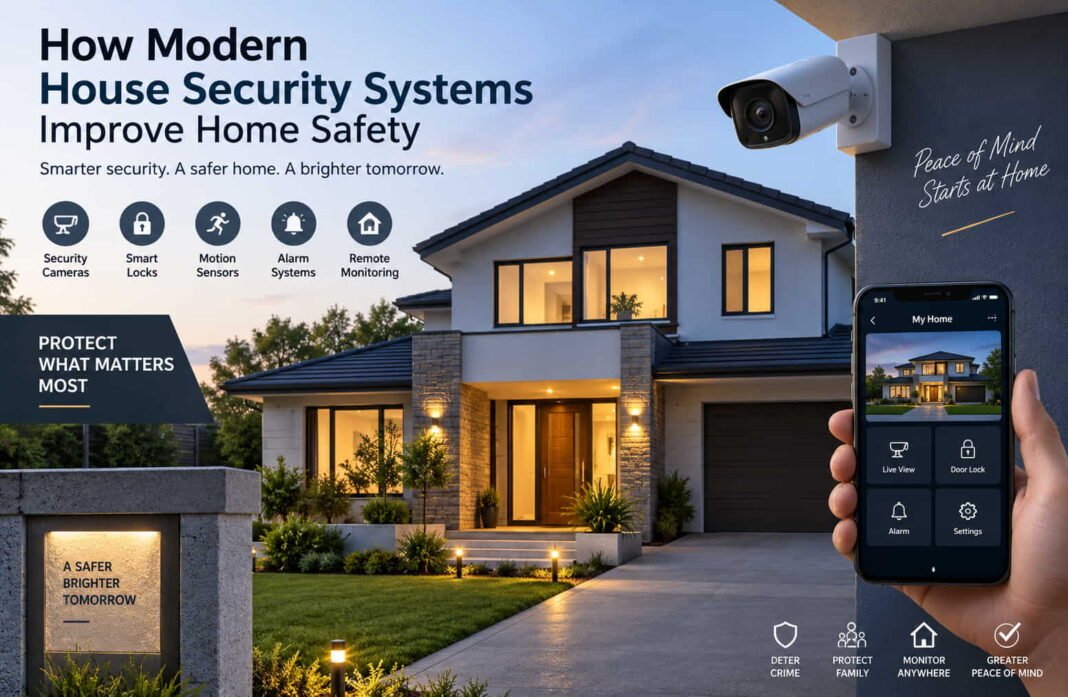
Home safety has become an important priority for homeowners looking to protect their families, belongings, and personal privacy. Traditional locks and basic security measures can provide some protection, but modern technology has introduced more advanced ways to monitor and secure residential properties. From smart cameras and motion sensors to connected alarms and automated door locks, homeowners now have access to a wide range of security solutions.
Modern house security systems are designed to help homeowners identify potential risks, monitor their property, and respond quickly to unusual activity. While no security system can guarantee complete protection, combining suitable technology with good security habits can improve awareness and reduce avoidable risks.
In this article, we will explore how modern home security technology improves safety, the features homeowners should consider, and how to choose a system that suits their property.
The Importance of Modern Home Security
Home security is not only about preventing burglary. It also involves protecting family members from hazards, monitoring visitors, identifying unusual activity, and receiving timely alerts when something goes wrong.
Older security methods often depend on physical locks, outdoor lighting, and neighbours noticing suspicious activity. These measures can still be useful, but modern technology allows homeowners to monitor their property remotely and receive notifications in real time.
For example, a smart security camera can send an alert when movement is detected near an entrance. Similarly, a connected alarm system may notify homeowners when a door or window is opened unexpectedly.
These features can help people make informed decisions instead of relying only on physical inspections.
Smart Security Cameras Improve Visibility
One of the most common features of modern home security is video surveillance. Security cameras can be installed near front doors, driveways, garages, balconies, and other important areas around a property.
Modern cameras may include features such as:
- High-definition video recording
- Night vision
- Motion detection
- Two-way audio
- Mobile notifications
- Cloud or local storage
- Wide-angle viewing
These features allow homeowners to check what is happening around their property, even when they are away. For instance, a homeowner may receive a notification when someone approaches the front door or when movement is detected in the driveway.
However, cameras should be positioned carefully to respect neighbours’ privacy and comply with applicable laws. Homeowners should also use strong passwords and updated software to reduce the risk of unauthorized access.
Smart Locks Provide Better Access Control
Traditional locks remain an important part of residential security, but smart locks provide additional access management options. Depending on the model, smart locks may allow homeowners to unlock doors using a code, smartphone application, fingerprint, or other approved method.
One benefit of smart locks is the ability to manage who can access the property. For example, temporary access codes may be provided to trusted visitors, cleaners, or service professionals. Some systems also allow homeowners to review access activity.
However, smart locks should not be selected based only on convenience. Homeowners should consider the lock’s physical strength, installation quality, battery backup, compatibility with the existing door, and available emergency entry options.
A poorly installed smart lock may create reliability or security concerns. Professional installation can help ensure that the lock operates correctly and works with the property’s existing door hardware.
Motion Sensors and Door Alarms
Motion sensors and contact sensors are useful components of a modern residential security setup. Door and window sensors can detect when an entry point is opened, while motion sensors monitor movement within selected areas.
These devices can be configured to send alerts or activate an alarm when unexpected activity occurs. Some systems allow homeowners to adjust sensor sensitivity and create different settings for daytime and nighttime use.
For example, a homeowner may activate window sensors and external doors while the family is sleeping. Motion detection can also be used in selected areas when nobody is expected to be inside the property.
It is important to position sensors correctly. Poor placement, pets, environmental conditions, or unsuitable sensitivity settings can lead to false alarms. Regular testing and maintenance help ensure that the system remains reliable.
Mobile Monitoring and Real-Time Alerts
One of the biggest improvements in modern house security systems is remote monitoring through mobile applications. Many connected systems allow users to view cameras, receive alerts, control alarms, and manage access from their smartphones.
This can be particularly helpful when homeowners are travelling, working away from home, or managing a second property.
Depending on the system, notifications may be triggered by:
-
Unexpected door or window activity
-
Motion detected in a restricted area
-
Smoke or heat detection
-
Water leakage
-
Security alarm activation
-
Camera connectivity problems
Receiving an alert does not automatically mean that a crime or emergency is taking place. Homeowners should assess the situation carefully and contact the appropriate emergency service when necessary.
A reliable internet connection, backup power, and secure account settings are also important considerations for connected monitoring systems.
Smoke, Fire, and Environmental Protection
Home safety extends beyond protection against intruders. Modern security solutions can also include devices that identify environmental hazards, such as smoke, fire, carbon monoxide, water leaks, and unusual temperature changes.
Smart smoke detectors may send alerts to a homeowner’s phone, even when the homeowner is not at home. Water leak sensors can help identify problems near washing machines, water heaters, kitchens, and other areas where leaks may cause damage.
These devices can support early awareness, but they should not replace legally required or professionally recommended safety equipment. Smoke and carbon monoxide detectors should be installed in suitable locations and tested regularly.
Homeowners should also understand how alerts work during power or internet outages and whether the system has battery backup.
Integration with Lighting and Automation
Modern home security technology can work together with smart lighting and automation tools. Automated lights can be programmed to switch on at specific times or respond to movement, helping improve visibility around entrances and outdoor areas.
Some systems allow homeowners to create routines that make a property appear occupied while residents are away. For example, lights may turn on during the evening, while smart blinds or other connected devices follow a scheduled pattern.
Lighting alone cannot prevent every security incident, but well-placed exterior lights can reduce dark areas around doors, pathways, and garages.
Automation should be configured carefully to avoid creating predictable patterns that could reveal when the property is unoccupied.
Choosing the Right House Security Systems
Every home has different security requirements. A small apartment may need a different setup from a large detached house with a garage, garden, and multiple entrances.
Before purchasing a system, homeowners should assess the following factors.
Property Layout
Identify the main entry points, vulnerable windows, garages, and areas that require monitoring. This helps determine how many cameras and sensors may be needed.
Security Features
Consider whether you require video recording, mobile alerts, smart locks, alarms, environmental sensors, or a combination of these features. Avoid paying for features that do not match your actual needs.
Installation Requirements
Some devices are designed for DIY installation, while others require professional wiring or configuration. Incorrect installation may reduce system performance.
Privacy and Data Security
Review how the system stores and processes information. Use strong passwords, enable multi-factor authentication where available, and keep firmware updated.
Ongoing Costs
Some security products involve subscription charges for cloud storage, professional monitoring, or advanced features. Review the long-term cost before making a purchase.
Professional Installation and Maintenance
Even high-quality security equipment may not perform effectively if it is installed incorrectly. Cameras need suitable viewing angles, sensors must be positioned properly, and smart locks require accurate fitting.
Professional installers can assess the property and help configure the system according to the homeowner’s requirements. They may also explain how to use the application, manage access permissions, and respond to alerts.
Maintenance is equally important. Homeowners should test alarms, replace batteries when required, inspect cameras, update software, and check whether sensors are functioning correctly.
A system that is installed but rarely tested may not provide the expected level of protection when it is needed.
Combining Technology with Everyday Security Habits
Technology works best when combined with responsible security practices. Homeowners should continue locking doors and windows, avoiding the public sharing of travel plans, securing spare keys, and maintaining outdoor lighting.
It is also useful to review who has access to smart locks, security applications, and monitoring accounts. Remove old access codes and update permissions when household circumstances change.
For families, everyone should understand how the security system operates and what to do when an alarm or emergency notification is received.
Modern house security systems can provide useful tools, but they should be treated as part of a broader home safety strategy rather than a complete replacement for awareness and preparation.
Conclusion
Modern security technology has changed the way homeowners protect and monitor their properties. Smart cameras, connected alarms, access control systems, motion sensors, and environmental detectors can improve visibility and provide timely alerts.
The most suitable solution depends on the home’s layout, security concerns, budget, privacy preferences, and installation requirements. Homeowners should compare features carefully and consider professional installation when the system involves complex wiring or access control.
By combining reliable technology with regular maintenance and sensible security habits, families can create a more organised and responsive approach to home safety. Whether you are upgrading an existing setup or planning a new installation, selecting suitable house security systems can be an important step toward improving everyday protection and peace of mind.