

You ever finish tiling your shower only to notice water seeping through cracks or pooling in odd spots? It’s a gut punch, especially after all that effort. That’s where shower screeding comes in—it’s that crucial layer of leveled, water-resistant base you slap on before the tiles go down, making sure everything stays dry and sturdy. Here in Australia, with our humid spells in Queensland or the sneaky leaks from coastal rains in Sydney, shower screeding isn’t optional; it’s what keeps your bathroom from turning into a swamp. I’ve helped a couple of mates fix botched jobs where they skipped it, and trust me, doing it right from the start saves headaches and cash. In this guide, we’ll break down what shower screeding involves, why it’s a must for our homes, the tools and steps to nail it, and tips tailored to Aussie conditions like building codes or that love for open-plan wet rooms. Whether you’re renovating a fibro cottage in Melbourne or building a new ensuited granny flat in Perth, let’s get your shower screeding sorted so you can step in with confidence.
What Shower Screeding Really Involves and Why It Fits Aussie Builds
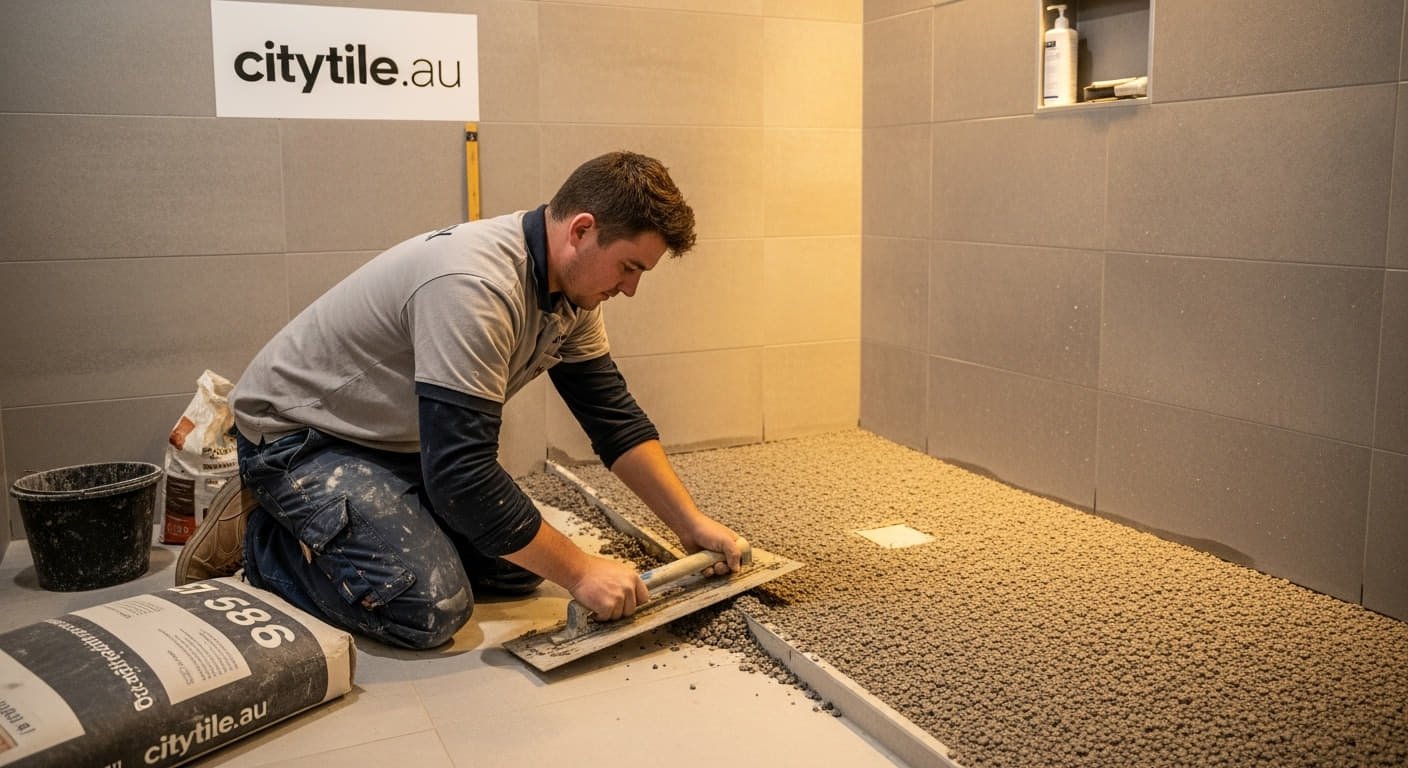
Shower screeding is basically creating a sloped, smooth bed of mortar or cement mix on your shower floor or walls, directing water to the drain while prepping for tiles. It’s not the flashy part of a reno, but it’s the unsung hero that stops moisture from wicking up and causing mold or slips. In Australia, where we pack showers into compact spaces or go big with outdoor rinses, shower screeding handles our variable weather—think steamy Darwin mornings or chilly Tasmanian winters.
From chats with tradies, shower screeding ties into waterproofing chats, like layering membranes before the screed for extra seal. It’s common in our kit homes or apartments, where space is tight and leaks hit hard. A friend in Brisbane learned the hard way after a tropical downpour flooded his new shower—turns out, poor shower screeding let water pool. Done right, it slopes gently (1-2% fall) to the drain, blending with our practical, no-fuss home style. Related bits like grout sealing or backer board often pop up, ensuring the whole wet zone holds up to daily use.
Why Shower Screeding Is Essential for Long-Lasting Aussie Showers
Skipping shower screeding might save time upfront, but it bites back with cracks or rot later—especially in our climate. Proper shower screeding levels uneven floors, bonds tiles firmly, and channels water away, cutting mold risks in humid spots like Cairns. It’s a durability booster too; our expansive soils in Sydney can shift slabs, but a good screed flexes without cracking.
Health-wise, it prevents slips on uneven tiles, key for families with kids or elderly in Melbourne’s slippery winters. Eco-angle: Shower screeding with low-water mixes supports our sustainability push, reducing leaks that waste H2O. I’ve seen a coastal home in the Gold Coast where solid shower screeding held up through cyclones—no water damage, just peace of mind. Culturally, Aussies value tough, low-maintenance homes, so shower screeding fits that bill, often paired with native stone tiles for a relaxed vibe.
Materials and Tools for Getting Shower Screeding Right
Picking the right stuff for shower screeding sets you up for success—here’s the kit without overcomplicating it.
Choosing the Best Screed Mix for Your Project
Opt for cement-based screeds with polymers for flexibility—standard 1:3 cement-sand ratios work, but add latex for wet areas. In humid Queensland, quick-dry mixes cure faster, avoiding prolonged damp. Fiber-reinforced options fight cracks in shifting Perth soils.
For eco-minds, lime-based screeds breathe better in Melbourne’s damp, reducing trapped moisture. Thickness? 20-50mm for floors, thinner for walls. A tip from a reno buddy: Test a small batch for workability—too stiff won’t level, too wet slumps.
Essential Tools for Hands-On Shower Screeding
Keep it simple:
- Mixing gear: Bucket, drill with paddle for even blends—hand-mixing tires you out quick.
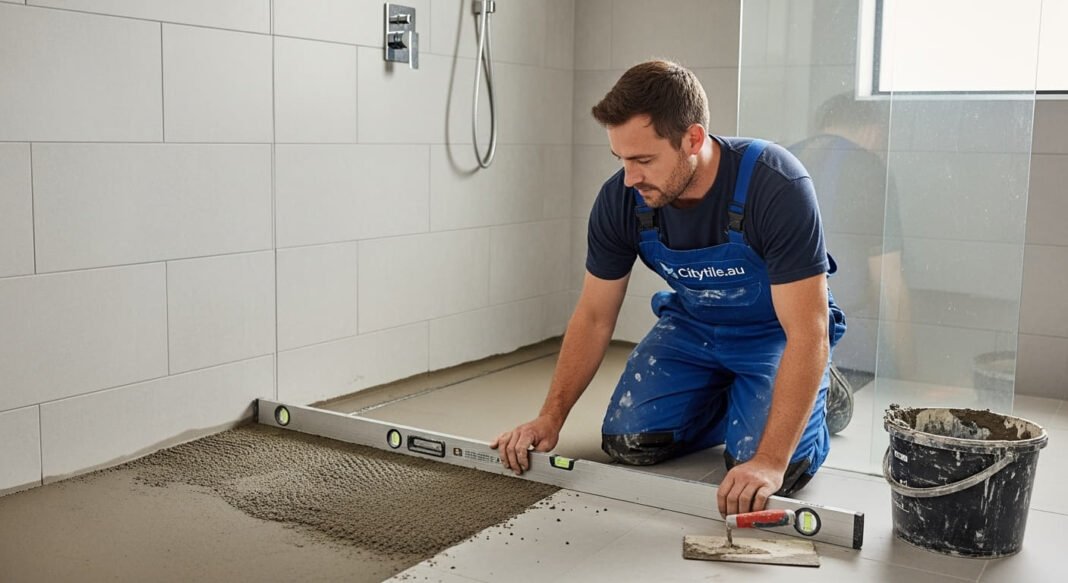
- Leveling tools: Straight edge and spirit level for that perfect slope; laser levels shine in bigger spaces.
- Application bits: Trowel for spreading, hawk for holding mix—soft rubber floats smooth it out.
- Safety and extras: Gloves, knee pads, and drop sheets—Sydney’s dust means masks too.
Budget $50-150 for basics; reusable tools pay off for multiple jobs. In coastal Tasmania, rust-proof trowels last longer against salt air.
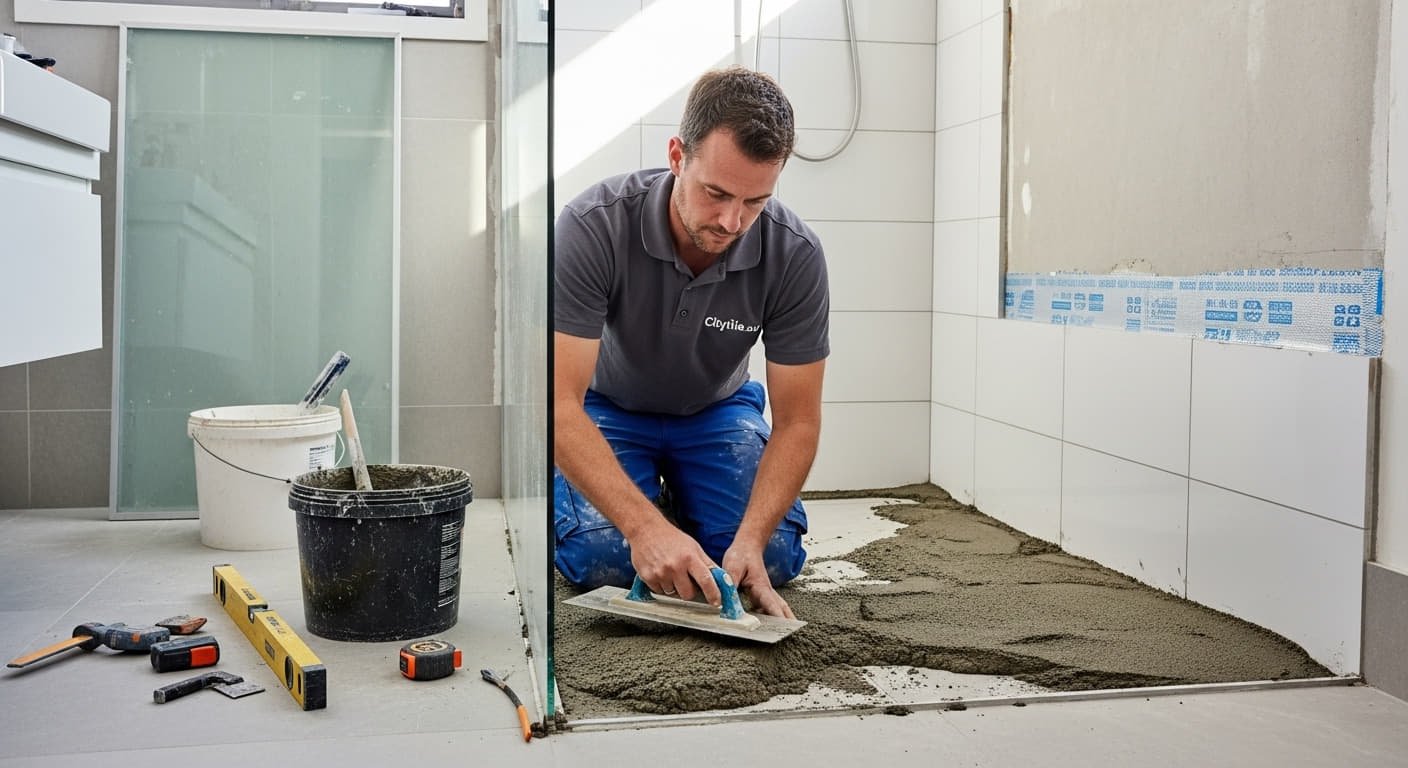
Step-by-Step Walkthrough for DIY Shower Screeding
Tackling shower screeding yourself is rewarding if you’re steady-handed—here’s how, step by step.
Prepping the Surface Before Shower Screeding
Clean the base: Remove old adhesive or debris, repair cracks with filler—let it dry 24 hours. Prime for adhesion, especially on concrete slabs common in Aussie homes. In Brisbane’s humidity, use fans to speed drying.
Mark your fall line with string or chalk—1:50 slope to drain. A mate in Adelaide skipped priming once; the screed peeled after a month. For walls, waterproof the substrate first per AS 3740.
Mixing and Applying the Screed Layer
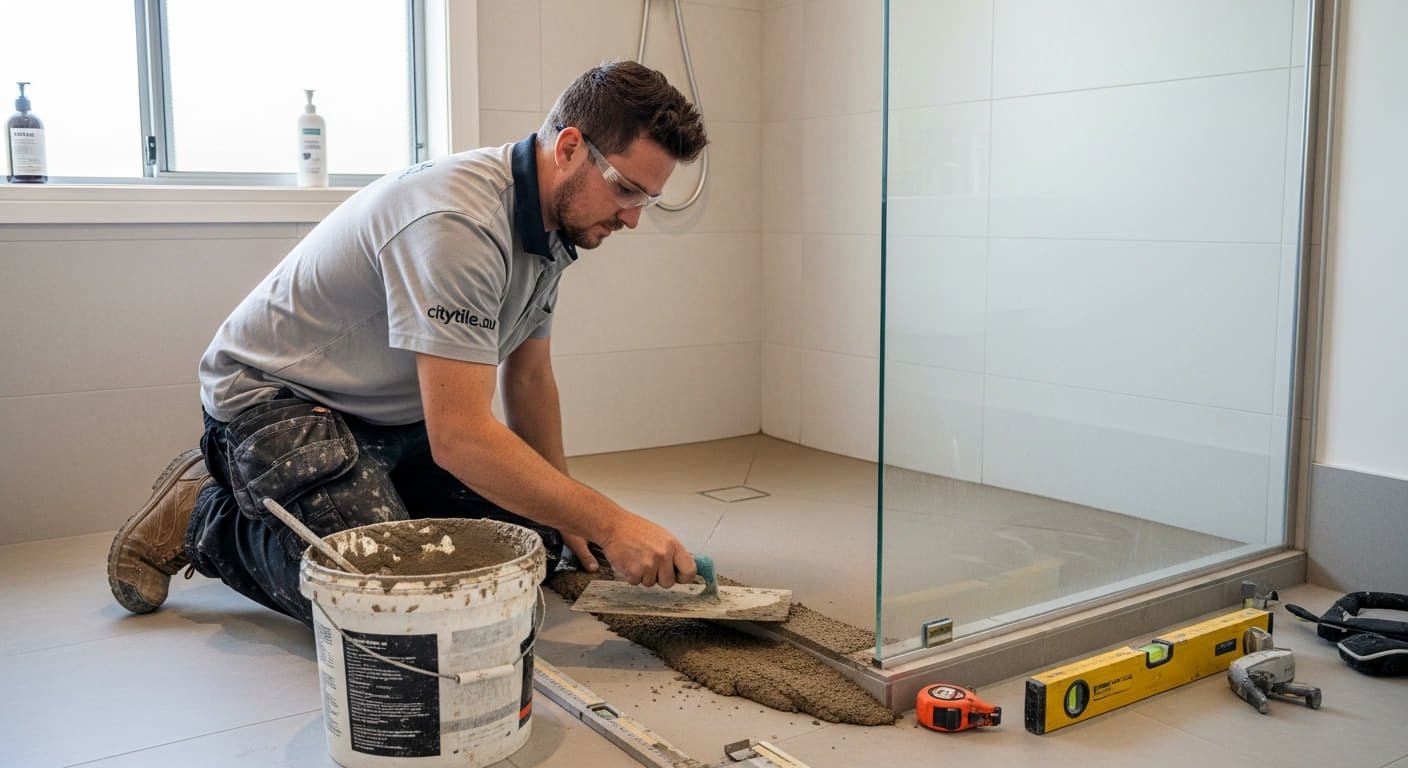
Mix small batches—add water gradually for a workable paste, no lumps. Trowel from the far corner, feathering to the drain for smooth flow. Use a straight edge to level, checking with your spirit tool every few minutes.
For walls, build up in layers if thick. In hot Perth days, mist to slow curing—cracks hate fast dries. Aim for 24-48 hours before walking on it; tile after full cure (7 days).
Curing, Tiling, and Final Checks for Shower Screeding
Cover with plastic to retain moisture during cure—mist if dry. Once set, tile with flexible adhesive to match movement. Seal edges and grout for full protection.
Test with a hose: No pooling means success. In Melbourne’s cool, a full week’s cure avoids winter damp issues. Example: A family in Hobart did shower screeding this way—tiles held firm through rainy seasons, no grout haze.
Common Pitfalls in Shower Screeding and How to Dodge Them
Even pros slip up, but spotting these keeps your shower screeding solid.
- Uneven slope: Double-check levels—water loves to pool in dips, breeding mold in humid Sydney.
- Poor mixing: Lumpy screed cracks; practice on scrap first.
- Rushing cure: Heat or fans speed it, but impatience leads to weak bonds—wait it out.
- Wrong thickness: Too thin flakes; too thick shrinks. Aim middle ground.
In rural New South Wales, earth movement amplifies cracks—use reinforced mixes. From a chat with a tiler, testing small areas saves big rewrites.
Aussie Regulations, Local Tips, and When to Call Pros for Shower Screeding
Our building scene has rules to ensure shower screeding lasts—know them to stay safe.
Key Standards and Compliance for Shower Screeding
AS 3740 mandates waterproofing in wet zones, including screed as prep—certified work’s required for warranties. States tweak: Queensland needs licensed pros for commercial; Victoria pushes eco-materials. Fines for non-compliant jobs hit $1,100—get it inspected if selling.
In multicultural Brisbane, shower screeding often suits bold, imported tiles from diverse heritages, but function trumps flash. Providers offer compliant kits, edging out DIY pitfalls.
Regional Twists and Pro vs. DIY Choices
Coastal Cairns? Salt-resistant screeds fight corrosion. Dry Adelaide? Breathable for crack control. Pros cost $300-800 but guarantee; DIY suits small updates.
Example: A Sydney couple DIY’d their ensuite shower screeding—saved $500 but followed AS 3740 videos. For complex falls, pros shine—especially in heritage Melbourne where codes are strict.
Questions and Answers: Common Questions About Shower Screeding in Australia
Q: How do I get the right slope for shower screeding in humid Brisbane?
Ans: Aim 1:50 fall to drain—use a laser level for precision, as Brisbane’s moisture hides pooling. Mix with polymers for flex; cure 72 hours with fans to beat steam.
Q: What’s the best screed thickness for wall shower screeding in Sydney?
Ans: 10-20mm bonds tiles without sagging—Sydney’s shifts need reinforced for stability. Prime first; test with a plumb line to keep it plumb.
Q: Do I need a pro for shower screeding in Melbourne wet rooms?
Ans: For showers, yes—Melbourne’s damp demands AS 3740 compliance. DIY splashbacks okay; pros handle falls and warranties, avoiding mold fines.
Q: How does shower screeding work with outdoor showers in Perth?
Ans: Thicker 30mm with UV additives—Perth’s sun cracks thin layers. Slope to drains; seal edges against dust. Pros add membranes for coastal winds.
Q: Can shower screeding fix uneven floors in Adelaide homes?
Ans: Yes, level with self-leveling compounds first—Adelaide’s dry air cures fast. Build 25mm; check with a straight edge to avoid trips.
Conclusion: Your Path to a Successful Shower Screeding in Australia
Shower screeding builds a leak-proof base that withstands our humid coasts and dry shifts, weaving materials like polymer mixes with steps for prep, application, and cure to dodge pitfalls like cracks or mold. We’ve unpacked techniques from membranes to liquids, tools for smooth work, common errors with fixes, and local spins like AS 3740 rules or coastal tweaks. From Sydney ensuites to Perth patios, shower screeding supports our practical home love, blending function with flair.
To ace it, prime clean surfaces, mix workable batches for even slopes, and cure fully before tiling—test with water runs. Go pro for wet zones or compliance, reseal yearly, and follow NCC for peace. This keeps your shower screeding strong, turning daily rinses into dry, worry-free routines ready for Aussie weather.