


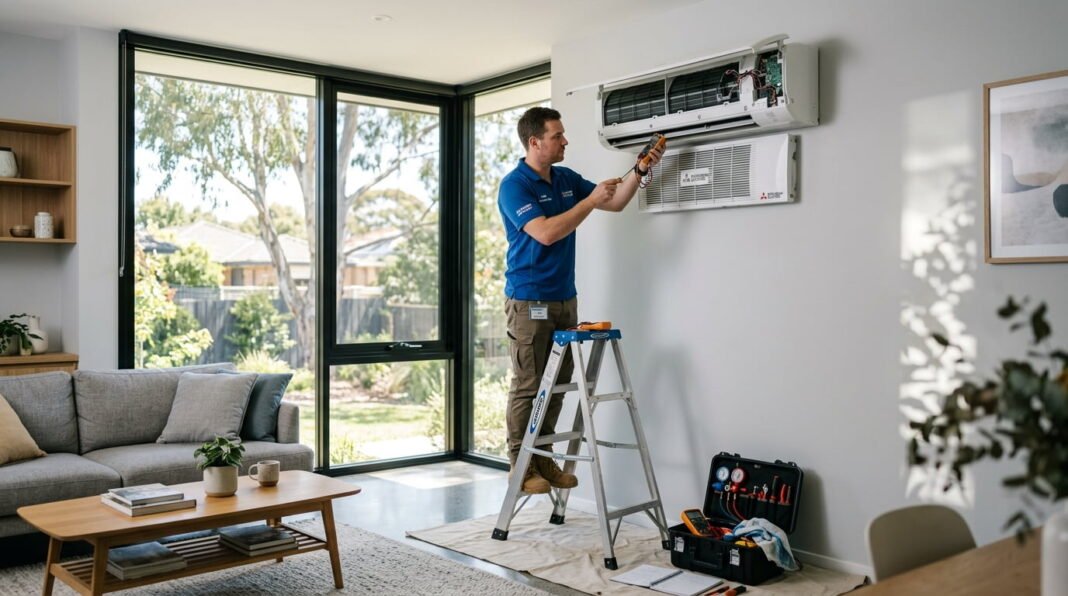
From what I’ve seen across Melbourne’s suburbs – from the breezy bays of St Kilda to the leafy streets of Camberwell – homeowners are demanding more than just a heater in winter & a cooler in summer. They want a unit that tackles dust, allergens, energy bills and even the occasional overnight snooze. The Mitsubishi Split System delivers exactly that. It’s a reverse‑cycle mini‑split heat pump that fits into tight council houses, apartment balconies and new builds alike. Look, let’s get into the six key benefits that make it a top pick for aussie homes.
Mitsubishi Split System – Dual Barrier Coating Keeps It Clean
One of the biggest enemies of any indoor unit is dust that settles on the heat exchanger & facial surfaces. To be honest in melbourne’s dry winter & dusty spring that grime builds up fast forcing the compressor to work harder and chipping away at efficiency — The Dual Barrier Coating on the Mitsubishi Split System creates a protective layer that repels both hydrophilic particles like sand dust and hydrophobic stuff like cooking oil or cigarette smoke. This means the unit stays cleaner for longer cuts down on maintenance trips, & keeps the energy efficient HVAC humming along.
Because the coating reduces the amount of grime that can cling to the coil, you’ll notice a steadier temperature swing when the thermostat calls for heat or cool. In my experience, a cleaner coil translates to a quieter indoor unit – something you’ll appreciate when you’re watching a footy match in a living room that’s already busy with conversation — And that matters because a quieter unit means less background noise for the kids doing homework or the elderly trying to catch a nap.
Mitsubishi Split System – Anti‑Allergy Enzyme Filter 4 Healthy Air
Allergens are a big deal down Melbourne, especially during pollen season when the city’s parks release a flood of spores. The Anti‑Allergy Enzyme Filter fitted to the larger AS90 model captures mould spores, bacteria and even pet dander, then uses enzymes to break them down. The result is fresher, cleaner air that reduces the risk of sneezing fits and wheezing. It’s a feature that many families with asthma or eczema swear by, and it’s a solid reason to choose a Mitsubishi Split System over a plain‑ Jane model.
When you pair that filter with regular cleaning of the indoor unit, you get a system that actively improves indoor air quality rather than just moving stale air around. In my experience, the combination of the enzyme filter and the Dual Barrier Coating creates a two‑layer defence that keeps the air in a Melbourne home healthier than the air outside during a hot summer afternoon. And that’s a win for any household that cares about wellbeing.
Mitsubishi Split System – Far‑reaching Airflow Options
Effective climate control in a large open‑plan living area, like those common in modern inner‑city apartments, needs more than a single fan blast. The Mitsubishi Split System offers three airflow modes – Long Mode, Wide Vane and Powerful Mode – that let you tailor the breeze to the room’s shape. Long Mode pushes the fan speed and adjusts the horizontal vane so the conditioned air reaches the far corners of a long hallway or a spacious lounge. Wide Vane lets you swing the airflow from left to right, creating a gentle, even temperature throughout.
Powerful Mode gives a quick boost when you first walk in from a sweltering day on the Dandenongs then automatically backs off after fifteen minutes to keep noise down. Using a higher fan speed for the first few minutes and then dropping to a lower speed once the target temperature is hit is a simple trick that maximises comfort while keeping the unit quiet. And that matters because Melbourne evenings can be a blend of cool breezes and lingering heat – you want a system that adapts without shouting.
Mitsubishi Split System – Wi‑Fi Control and Smart Management
Smart home tech is no longer a novelty in Melbourne; it’s a practical way to shave off a few kilowatt‑hours from your electricity bill. The Mitsubishi Split System’s Wi‑Fi control lets you adjust temperature, fan speed and mode from a smartphone, tablet or even a voice assistant — To be honest, you can set the unit to start heating just before you pull into the driveway in a suburb like footscray, or switch to cooling while you’re at work in the cbd. That kind of remote control reduces wasted energy & makes sure you walk into a home that’s already at a comfortable temperature.
Also, to remote control, the app provides diagnostics that flag filter clogs, error codes and even suggests the best time to run a cleaning cycle — It’s a handy tool 4 homeowners who want to keep the system in top shape without calling a tradesperson 4 every little hiccup. And that matters because a well‑maintained unit lasts longer, costs less to run and stays quieter – all things Melbourne families appreciate.
Mitsubishi Split System – Night Mode for Quiet Sleep
Night Mode is a feature that many people overlook, but it makes a massive difference when you’re trying to get a solid night’s sleep in a bustling suburb like Richmond. The mode dims the LED display, silences beeps and reduces the outdoor unit’s noise by up to three decibels. In a house where the bedroom is adjacent to a street that never truly sleeps, that reduction can be the difference between a restless night and a deep, uninterrupted sleep.
It also tweaks the temperature set‑point slightly to avoid the unit cycling on & off too often, which helps keep the indoor environment stable throughout the night. I’ve seen families in the outer suburbs of Melbourne benefit from this, especially those with toddlers who wake at the slightest sound. And that matters because a good night’s rest translates to a better day – something every homeowner values.
Mitsubishi Split System – Choosing the Right Model for Melbourne Homes…
Choosing the right model starts with understanding your home’s size, orientation & typical climate patterns. In Melbourne, you’ll often deal with hot, humid summers and cool, damp winters, so a reverse‑cycle mini‑split heat pump that can handle both ends of the spectrum is essential — The AP series spans from the compact MSZ‑AP20, perfect for a home office in a terrace house, up to the larger MSZ‑AS90 for open‑plan living spaces in a new build on the bayside. Look for a unit with a high energy efficiency rating – the Australian government’s star rating is a good benchmark.
Installation cost varies across the city, but you can expect the price to reflect the complexity of the job, the length of refrigerant pipe runs and any required electrical upgrades. A reputable installer will give you a clear quote that includes the wall‑mount, the outdoor condenser & any necessary permits. When comparing models, also consider whether you need a multi‑zone system for a two‑story house or a single‑zone unit for a condo. And that matters because a well‑matched system saves money on your electricity bill & reduces the chance of future troubleshooting headaches.
Key Benefits of the Mitsubishi Split System
- Dual Barrier Coating – keeps the coil clean and maintains efficiency.
- Anti‑Allergy Enzyme Filter – improves indoor air quality for healthier living.
- Far‑reaching Airflow – Long Mode, Wide Vane and Powerful Mode for tailored comfort.
- Wi‑Fi Control – remote management and energy savings.
- Night Mode – quiet operation and stable temperature overnight.
- Adaptable to Melbourne’s climate – reverse‑cycle mini‑split heat pump for hot summers and cool winters.
Keeping Your Mitsubishi Split System Running Smoothly
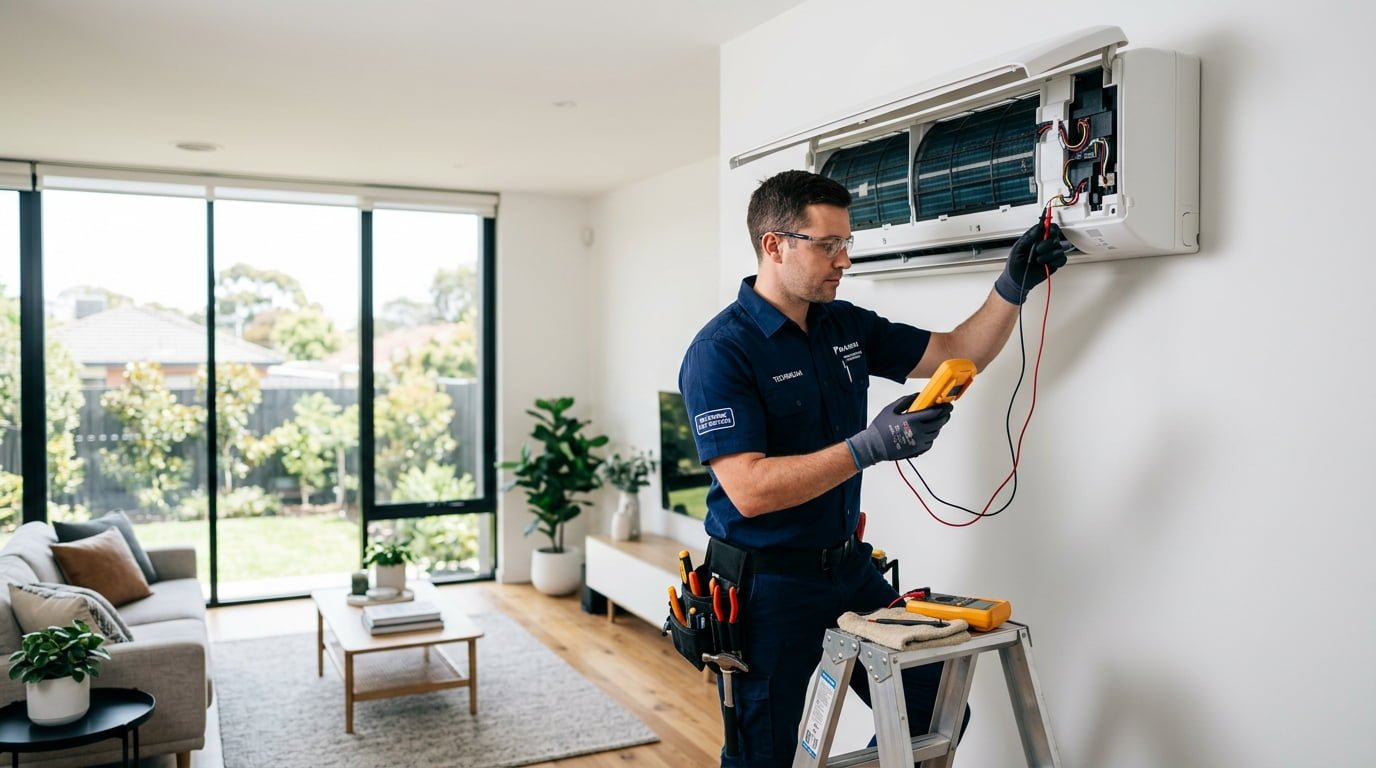
Even the best‑built unit can hit a snag if it isn’t looked after. Common issues in Melbourne include condensate drain blockages caused by the city’s occasional heavy rain and sensor faults that misread outdoor temperature during a sudden cold snap. Regularly check the indoor filter, clean the outdoor condenser fins and make sure the drainage pipe slopes away from the house. If you notice a drop in performance, the Wi‑Fi app can alert you to error codes, and a quick call to a qualified technician will usually sort it out.
When you compare a split system to a ducted air conditioner, keep in mind that a split unit offers zone temperature control – you can set different rooms to different temperatures without running a whole‑house system. That’s a big energy saver in a place like Melbourne where you might want the living room cool while the bedroom stays warm at night. And that matters because targeted heating & cooling reduces waste and keeps your electricity bill in check.
Overall, the Mitsubishi Split System combines durability, smart features and health‑focused technology into a package that fits neatly into Melbourne’s diverse housing stock — Whether you’re in a compact apartment in the CBD or a sprawling family home in the eastern suburbs, the right model can deliver year‑round comfort without the hassle of a bulky ducted system. Give it a go, and you’ll see why so many locals are swapping out old units for this modern, efficient solution.