

Ever noticed your doors sticking more than usual? Perhaps you’ve spotted some worrying cracks creeping along your walls? Or maybe your floors have developed a bounce that wasn’t there before? These could all be signs that your home’s stumps are crying out for attention.
House restumping is one of those topics that many Australian homeowners don’t think about until something goes wrong. Yet understanding when your home needs this vital work can save you thousands of dollars and prevent serious structural damage down the track. Whether you’re living in a heritage Queenslander or a suburban Melbourne home, the foundations beneath your feet play a crucial role in keeping everything above ground level safe and sound.
In this guide, we’ll walk you through everything you need to know about house restumping and reblocking. You’ll learn how to spot the warning signs, understand the process involved, and get a clear picture of costs across different Australian regions. Plus, if you’re considering buying a house that needs restumping, we’ve got some essential advice to help you make an informed decision. Let’s get stuck into it.
What Is Restumping and Reblocking a House?
The Difference Between Restumping and Reblocking
Here’s something that confuses plenty of homeowners: restumping and reblocking are actually the same thing. The terminology simply varies depending on where you live in Australia. In Queensland, you’ll typically hear people talk about restumping, while Victorians tend to use the term reblocking. Both refer to the process of replacing the stumps (or blocks) that support your home’s floor structure.
These stumps are the vertical supports that sit between your home’s bearers and the ground. Over time, they can deteriorate, sink, or shift, causing all sorts of problems throughout your property. When this happens, house stump replacement becomes necessary to restore your home’s structural integrity.
Types of House Stumps Used in Australian Homes
Australian homes feature several types of stumps, each with different lifespans and characteristics. Timber stumps were the go-to choice for decades, particularly red gum, which can last 20-80 years depending on soil conditions. However, they’re susceptible to rot and termite damage.
Concrete stumps have become increasingly popular and typically last 50-100 years. They’re resistant to rot and pests but can crack in certain soil conditions. Steel stumps represent the modern standard, offering excellent durability and adjustability. Many Australian reblocking companies now recommend galvanised steel as the preferred option for house stump replacement.
Warning Signs Your Home Needs Restumping
Visible Floor Sagging and Unevenness
One of the most obvious signs that you need restumping is when your floors start to feel uneven. You might notice that furniture wobbles when it didn’t before, or that dropped items roll consistently in one direction. In severe cases, you can actually see the floor dipping in certain areas.
Walk through your home barefoot and pay attention to what your feet tell you. Changes in floor level, even subtle ones, often indicate that stumps have shifted or deteriorated. This is particularly common in older homes where timber stumps have begun to rot.
Doors and Windows That Stick or Won’t Close Properly
When your home’s foundations move, it affects the entire structure above. Doors that once closed smoothly might suddenly stick or refuse to latch properly. Windows can become difficult to open or close. While these issues sometimes result from humidity changes, persistent problems often point to foundation movement.
If you’re constantly adjusting door hinges or shaving doors to make them fit, it’s worth investigating whether your stumps are the root cause. It’s a telltale sign that shouldn’t be ignored.
Cracks in Walls, Ceilings, and Brickwork
Keep an eye out for cracks appearing in your plasterwork, particularly around door frames and window openings. Diagonal cracks that seem to “step” along mortar lines in brickwork are especially concerning. These patterns suggest that your home is moving in ways it shouldn’t be.
Not all cracks indicate stump failure—some settling is normal in any home. However, cracks that grow wider over time or appear suddenly warrant professional inspection. Problems after restumping can also cause some cracking, but we’ll cover that later.
Bouncy or Springy Floors
Does walking across your lounge room feel a bit like walking on a trampoline? Springy or bouncy floors are a clear indication that the support beneath isn’t doing its job properly. This bounciness occurs when stumps have deteriorated to the point where they can no longer provide adequate support.
This issue is more than just annoying—it represents a genuine safety concern. Excessively flexible floors can lead to structural failure if left untreated, making prompt action essential.
Visible Stump Deterioration and Rot
If you can access the subfloor area of your home, take a torch and have a look at the stumps directly. Signs of rot, termite damage, or crumbling concrete are obvious indicators that replacement is needed. Timber stumps that feel soft when prodded or show signs of fungal growth need immediate attention.
How to Restump a House: The Complete Process
Initial Inspection and Assessment
The restumping process begins with a thorough inspection by qualified professionals. They’ll assess every stump beneath your home, checking for damage, movement, and deterioration. Using a house stump jack and other equipment, they’ll measure floor levels throughout the property.
This assessment determines exactly how many stumps need replacing and identifies any additional structural issues. You’ll receive a detailed quote outlining the scope of work required.
House Stump Replacement Methods and Timeline
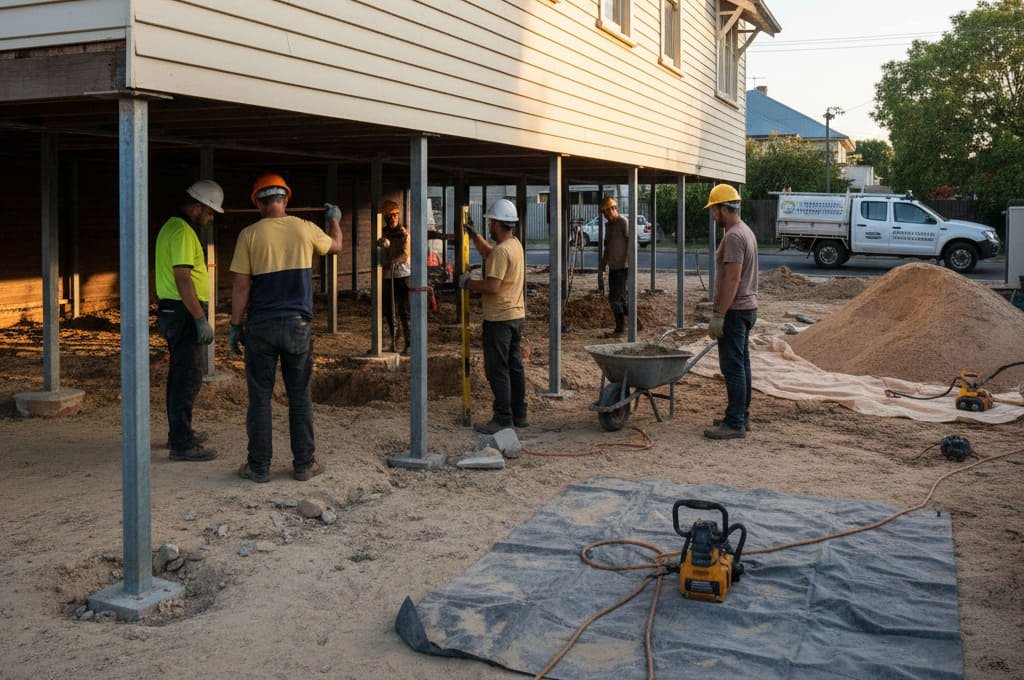
Once work begins, the team will systematically replace damaged stumps while temporarily supporting your home’s structure. Modern techniques allow this work to proceed with minimal disruption. Most Brisbane restumping and other professional services can complete an average home in three to five days.
During the work, hydraulic jacks lift the house while old stumps are removed and new ones installed. The house is then carefully lowered onto the new stumps and levelled precisely. It’s quite impressive to watch, actually.
House Restumping Costs Across Australia
Regional Price Differences
House restumping Brisbane cost typically ranges from $400-$800 per stump, depending on the type of stump chosen and accessibility issues. House restumping NSW prices are similar, though inner-city areas may command premium rates due to access challenges.
In Melbourne suburbs, services like reblocking Croydon and reblocking Mitcham generally fall within the $450-$700 per stump range. Factors affecting your final quote include the number of stumps needed, stump type selected, soil conditions, and how easily workers can access the subfloor area.
Buying a House That Needs Restumping
How to Spot Issues and Negotiate?
Buying a house that needs restumping isn’t necessarily a dealbreaker, but you need to go in with your eyes open. During inspections, look for all the warning signs mentioned earlier. Request a building inspection that specifically assesses stump condition.
If restumping is needed, obtain quotes before settlement and negotiate accordingly. Many buyers successfully reduce purchase prices by the estimated cost of works plus a margin for inconvenience. With the right approach, a property requiring reblocking a house could actually represent excellent value.
.png "Restumping")
Common Problems After Restumping
What to Expect and How to Avoid Issues?
Some problems after restumping are normal and expected. Minor cracks may appear as your home settles onto its new foundations—this typically resolves within a few months. More significant issues usually result from choosing inexperienced contractors.
To avoid complications, always select reputable professionals with proper licensing and insurance. Check reviews for companies like Spot On Reblocking, GTS Reblocking, or other established Australian reblocking services in your area. A quality job means fewer headaches later.
DIY vs Professional House Stump Replacement
Why Professionals Are Worth It?
Can you restump a house yourself? Technically, yes—but it’s really not recommended. The work requires specialised equipment, structural knowledge, and experience that most homeowners simply don’t have. Getting it wrong can cause serious damage to your property and create safety hazards.
Professional services bring expertise, proper insurance, and warranties that protect your investment. The peace of mind alone makes hiring restumping specialists or similar professionals worthwhile.
Protecting Your Home’s Foundation for the Future
Understanding when restumping is necessary helps you protect one of your biggest assets—your home. The warning signs are often subtle at first but become impossible to ignore as problems progress. Early intervention almost always costs less than waiting until damage becomes severe.
Whether you’re noticing the first signs of stump deterioration or actively planning renovations, getting a professional assessment is the smart first step. Quality house restumping restores your home’s structural integrity and can add decades to its lifespan. It’s an investment that pays dividends in safety, comfort, and property value.
Don’t put off investigating those sticky doors or bouncy floors any longer. Reach out to a reputable Australian reblocking company today and give yourself the peace of mind that comes with knowing your home stands on solid foundations. Your future self will thank you for it.