

When you pull up to your home after a long day, the first thing that greets you is the driveway. It guides you to your door and sets the tone for the entire property. In Australia, where we take pride in our street appeal and outdoor living spaces, the condition and style of your driveway matter. But when it comes time to pave a new path or replace an old, cracked surface, homeowners often find themselves stuck in the middle of the great debate: the asphalt vs concrete driveway.
Choosing the right material is about more than just picking a color. It involves understanding how the harsh Australian climate interacts with the ground, how much maintenance you are willing to perform, and what kind of finish suits your home’s architecture. Whether you are renovating a coastal home or upgrading a suburban block, making the right choice requires a deep dive into the pros and cons of these two heavyweights.
This guide will break down the differences, benefits, and drawbacks of both materials to help you decide which surface deserves a spot at your home.
Understanding the Core Differences
To make an informed decision, you first need to understand what these materials actually are. They might both be hard surfaces that you park a car on, but chemically and structurally, they are quite different.
Asphalt, often referred to as bitumen in Australia, is a mixture of aggregates (stones and sand) held together by a petroleum-based binder. It is essentially the same stuff used on public roads and highways. Because it is oil-based, it retains a certain level of flexibility. This flexibility allows it to expand and contract slightly with temperature changes.
Concrete, on the other hand, is a mix of cement, water, and aggregates. When this mixture dries, it cures into a solid, rigid stone-like slab. It does not flex. Instead, it relies on its sheer strength and thickness to handle heavy loads.
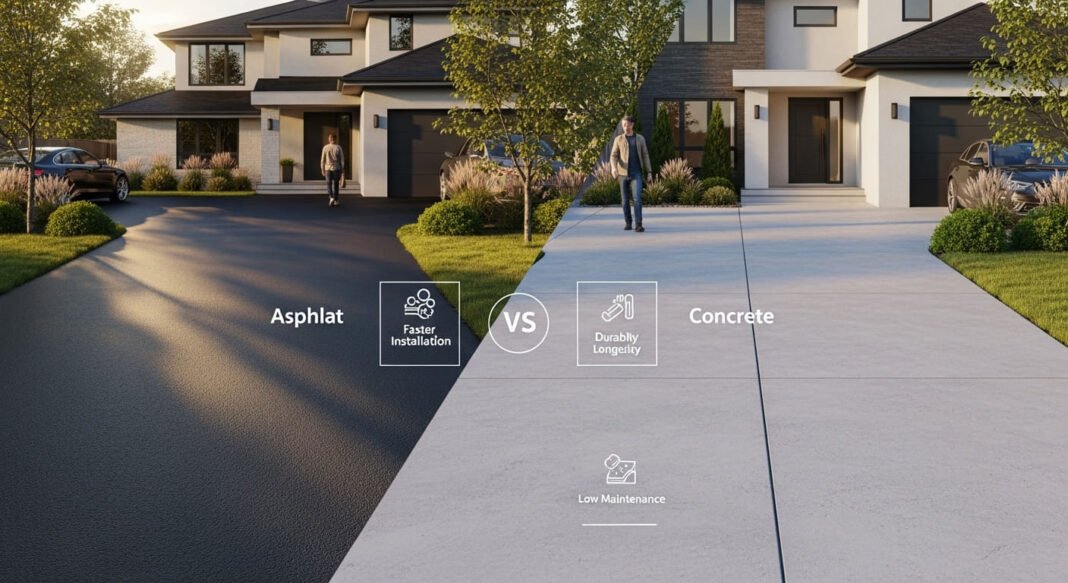
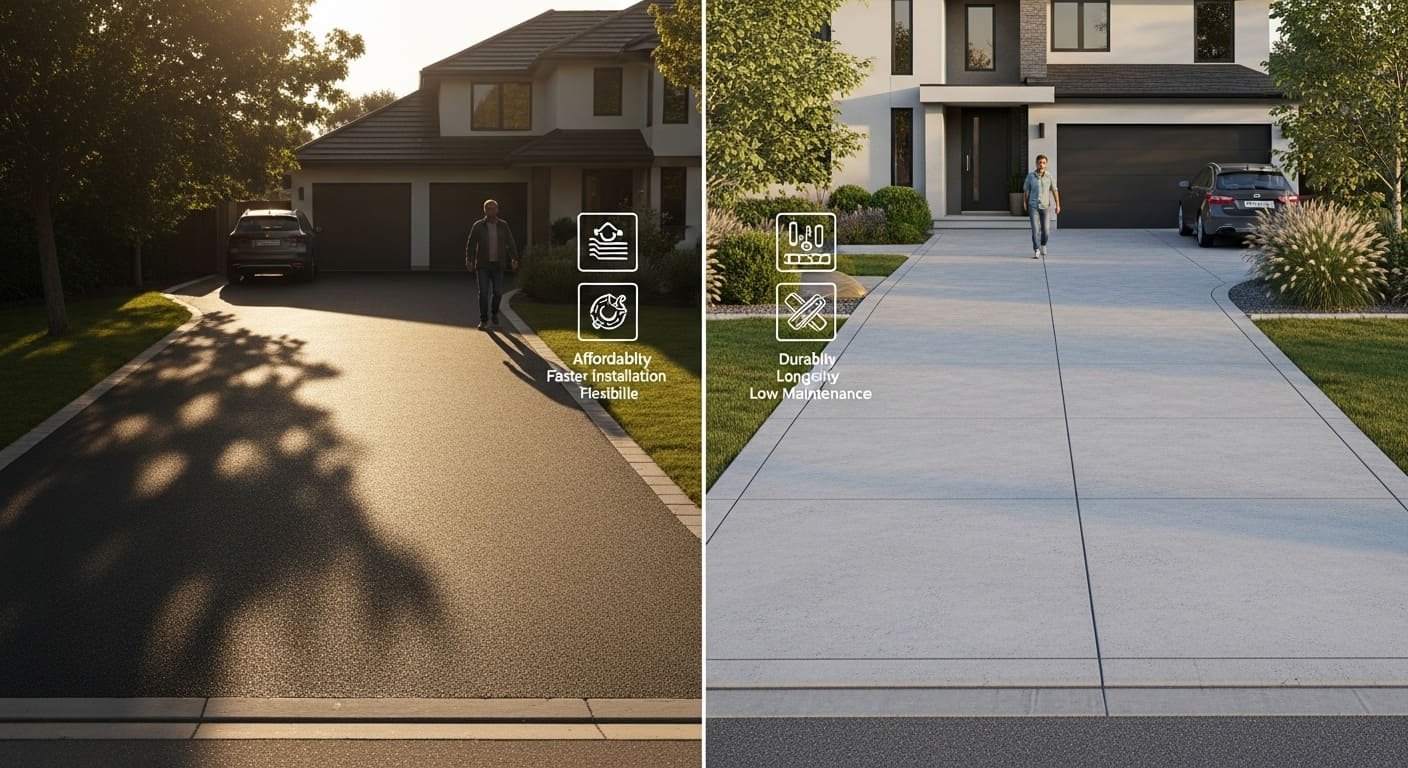
When weighing up an asphalt vs concrete driveway, you are essentially choosing between a flexible, dark surface and a rigid, lighter-colored surface. Each has specific characteristics that will react differently to the environment around your home.
The Aesthetic Factor: Curb Appeal and Style
For many homeowners, the look of the driveway is the deciding factor. Since the driveway often covers a large percentage of your front yard, it has a massive visual impact.
The Concrete Look
Concrete is incredibly versatile. Gone are the days when concrete meant a boring, grey slab. In modern Australian landscaping, options like exposed aggregate are incredibly popular. This finish reveals the natural stones and pebbles within the concrete, providing texture and a premium look that hides dirt well.
You can also opt for:
- Stencil Concrete: Patterns are sprayed onto the surface to mimic bricks, cobblestones, or tiles.
- Colored Concrete: Pigments are added to the mix to match your home’s render or roof tiles.
- Stamped Concrete: Texture is pressed into the wet cement to create a slate or stone effect.
If you want a highly customized entrance that complements a modern or rendered home, concrete usually offers more design freedom.
The Asphalt Aesthetic
Asphalt offers a sleek, continuous appearance. It creates a clean, black or dark grey line that leads to the house. It looks very similar to the road, which can be a positive or a negative depending on your preference.
For long, sweeping driveways on larger properties or acreages, asphalt is often the preferred choice because it blends naturally with the landscape and does not look as stark as a long strip of white concrete. However, design options are limited. You generally have a choice of black, and it will eventually fade to grey. You can add edging with bricks or pavers to give it a more finished look, but the surface itself is uniform.
Durability and Dealing with the Australian Climate
The local climate plays a huge role in the asphalt vs concrete driveway decision. Our weather can be brutal, ranging from scorching heatwaves to torrential downpours.
Heat Handling
In the height of summer, asphalt absorbs a significant amount of heat. Because it is black, it draws in the sun’s rays. On extremely hot days, asphalt can actually become soft. If you turn your car wheels while the vehicle is stationary on a scorching day, you might mark the surface. It can also be uncomfortable to walk on barefoot.
Concrete reflects light and stays cooler. This makes it a better option if your kids play basketball or cricket in the driveway, or if you frequently walk to the mailbox without shoes.
Soil Movement and Cracking
This is a critical latent topic for Australian homeowners. Many suburbs, particularly in newly developed areas, sit on reactive clay soils. These soils swell when wet and shrink when dry, causing the ground to move.
- Concrete: Being rigid, concrete can crack if the ground beneath it moves too much. To combat this, builders use steel reinforcement (reo) and cut control joints into the slab to encourage it to crack in straight, hidden lines rather than jagged spiderwebs.
- Asphalt: Its flexibility is a major advantage here. It can adapt to minor ground movements without cracking as easily as concrete. If the ground settles, the asphalt might dip, but it often won’t break apart.
Maintenance: The Long-Term Commitment
No driveway is truly “set and forget,” but the maintenance requirements for the two materials are vastly different.
Caring for Asphalt
Asphalt requires more regular attention. To keep it looking fresh and to prevent the binder from drying out and crumbling, you need to seal it. Sealing usually happens six months to a year after installation and then every few years after that.
However, repairs are easy. If an asphalt driveway develops a crack or a pothole, you can easily patch it. While the patch might be visible, the structural integrity is restored quickly. If the surface looks old and tired after a decade, you can often resurface it—adding a new layer of asphalt over the old one—without digging everything up.
Caring for Concrete
Concrete is generally lower maintenance in the short term. It does not need regular sealing, although sealing exposed aggregate is recommended to keep the stones shining and protect against stains.
The downside is that stains on concrete are very visible. Oil leaks from a car can penetrate the porous surface and be difficult to remove. Furthermore, if concrete cracks, it is very hard to fix invisibly. You can fill the crack, but the scar will always be there. Resurfacing concrete is possible but involves specialized coatings or grinding, which is a significant undertaking.
Installation and Curing
The process of getting the driveway into the ground differs largely in timing.
Asphalt Installation: This is a rapid process. Once the base is prepared, the asphalt is laid and rolled. It hardens by cooling. In most cases, you can drive on a new asphalt driveway within a day or two of installation. This is a huge benefit if you have limited street parking.
Concrete Installation: Concrete takes time. After pouring, it needs to cure. You typically have to wait roughly a week before you can drive a vehicle on it. The chemical process of hardening continues for months, but that initial week is crucial. If you park on it too soon, you risk structural damage.
Cost and Value
While we are avoiding specific prices, it is important to discuss value. Generally, asphalt is less expensive to install initially compared to concrete. This makes it an attractive option for homeowners with very long driveways where the cost of concrete would be prohibitive.
However, concrete is often viewed as adding more value to a property’s resale price. Its longevity and premium appearance appeal to buyers. When comparing asphalt vs concrete driveway costs, you must look at the life cycle. Asphalt is cheaper now but needs sealing and earlier replacement. Concrete costs more now but lasts longer with less ongoing work.
Geo-Specific Considerations: The Local Context
In Australia, you also need to consider your local council regulations. The “crossover”—the part of the driveway that crosses the council strip (nature strip) to the road—is often subject to strict rules.
Many councils require the crossover to be constructed of concrete for durability and uniformity along the street, even if your internal driveway is asphalt. You will likely need a permit for the crossover, and the council will inspect the formwork before the pour.
Additionally, consider the drainage. Australia experiences sudden, heavy storms. Both surfaces need to be graded correctly to shed water away from the home. Concrete allows for molded drains to be built into the slab, whereas asphalt usually relies on the overall slope of the land.
Questions and Answers: Common Questions About asphalt vs concrete driveway in Australia
Q: Which material is better for a steep slope?
For steep driveways, asphalt often provides better traction. The surface is naturally grippy, which helps tires hold on during wet weather. Concrete can be slippery when wet, especially if it has a smooth finish. However, you can opt for a rough “broom finish” or exposed aggregate concrete to improve traction on a slope.
Q: How do I clean oil stains off my driveway?
If you have concrete, you need to act fast. Use a degreaser or a specialized concrete cleaner and a stiff brush. For stubborn stains, a high-pressure washer helps. On asphalt, you must be careful with chemicals. Some solvents can dissolve the petroleum binder in the asphalt, damaging the surface. Always use a cleaner specifically designed for asphalt surfaces.
Q: Will tree roots ruin my driveway?
Yes, tree roots are a common enemy for both. However, asphalt is slightly more forgiving. As roots grow, they might lift the asphalt, creating a bump. You can often cut out that section, remove the root, and patch it. With concrete, a strong root will lift the heavy slab, causing it to snap. Repairing a lifted concrete slab often requires removing and re-pouring the entire section.
Q: Can I put a new surface over my old driveway?
If you have an existing concrete driveway that is structurally sound but looks ugly, you might be able to use a spray-on concrete resurfacing product. If you have an old asphalt driveway, you can often lay a new layer of asphalt on top (an overlay), provided the base is still solid. You generally cannot lay concrete directly over asphalt because the asphalt is too soft to support the rigid concrete slab.
Q: Which lasts longer in the Australian sun?
Concrete generally has a longer lifespan. A well-installed concrete driveway can last thirty to forty years or more. Asphalt typically lasts between fifteen to twenty years depending on maintenance. The UV rays in Australia are harsh and will oxidize the asphalt binder over time, causing it to become brittle and grey, whereas concrete is largely unaffected by UV damage.
Conclusion: Your Path to a Successful asphalt vs concrete driveway in Australia
Deciding between these two materials is a balance of practicality, budget, and style. If you are looking for a premium, low-maintenance finish that adds immediate value and street appeal to your suburban home, concrete—especially exposed aggregate—is often the winner. It handles the heat well and suits the architectural style of most modern Australian homes.