

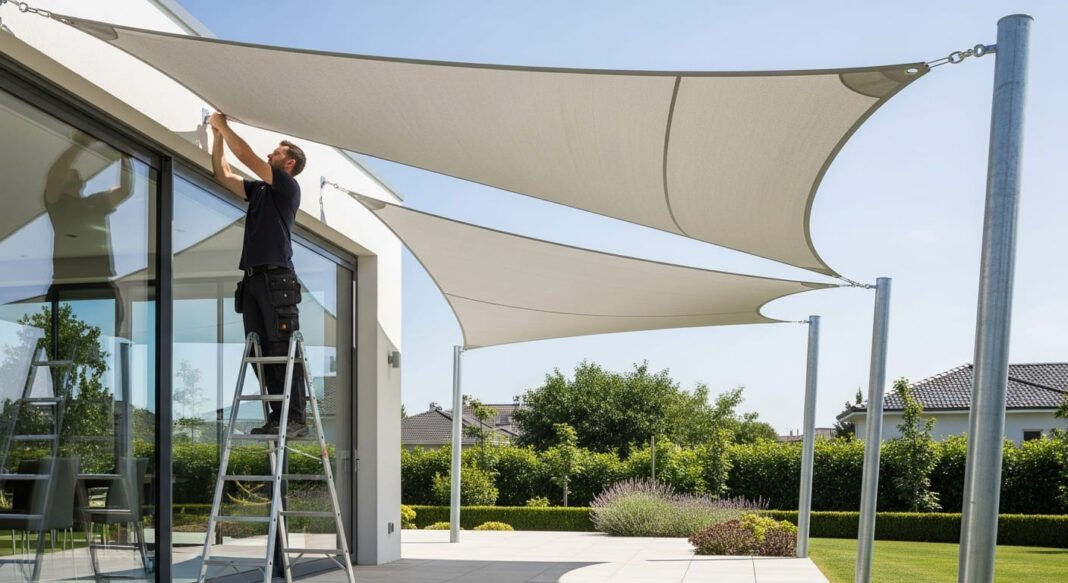
You ever head out to your backyard on one of those blistering Aussie afternoons and think, “Man, I need something to beat this heat”? Or maybe it’s a drizzly day, and you’re dodging raindrops while trying to fire up the barbie. That’s exactly when waterproof shade sails catch my eye—they’re those stretchy fabric canopies you see slung between posts or walls, giving you cover from the sun and a quick shield from showers. Here in Australia, with our killer UV rays and those pop-up storms, waterproof shade sails feel like a no-brainer for making outdoor spots more livable. I’ve talked to a few people who’ve slapped one up over their patio or kids’ play area, and they can’t stop going on about how it totally changes the game for family hangs or even just chilling with a cold one. In this rundown, I’ll walk you through what waterproof shade sails are all about, the real upsides for our neck of the woods, and some straightforward advice on getting one going. No matter if you’re dealing with Perth’s dry scorchers or Melbourne’s moody skies, let’s dig into how these things can sort your outdoor woes.
What Are Waterproof Shade Sails and How Do They Work?
Waterproof shade sails are pretty much big, taut sheets of tough fabric hooked up tight across anchors like poles or your house wall, forming a shaded zone that also keeps the wet off. They’re a far cry from clunky old umbrellas or fixed roofs—light as a feather, easy to shape to your space, and made to tough it out in rough weather. The material’s usually something like knitted HDPE or a vinyl-coated type that knocks back nearly all the sun’s bad rays but still lets a breeze sneak through, so you don’t end up in a hotbox.
Imagine draping one over your deck: it flutters a bit in the wind but holds firm, letting you sip your coffee in peace even if a sprinkle hits. Down here, where we’re always chasing that outdoor lifestyle, waterproof shade sails link up with stuff like creating cozy nooks, dodging sunburn, or even channeling rainwater smartly. They’re not some new invention—kinda like the sails on our boats, but evolved for backyards and parks. Now you spot them everywhere, from home setups to school playgrounds.
From what I’ve gathered hanging around folks who’ve got them, waterproof shade sails are super adaptable: curve ’em for a cool look or stretch ’em straight for max cover. They go up with simple bits like turnbuckles and wires to keep everything snug, and solid ones can handle gusts up to 100 km/h without a fuss. A buddy of mine in Brisbane rigged one over his poolside, and suddenly those sticky afternoons became prime lounging time instead of hiding indoors. If you’re mulling one over for your own spot, getting the lowdown on how they tick makes it clear why waterproof shade sails outshine the cheaper knockoffs.
Key Benefits of Waterproof Shade Sails for Everyday Use
Waterproof shade sails bring a ton of practical wins, especially when you factor in Australia’s wild mix of bake-and-pour weather. They do more than just block light—they touch on keeping healthy, staying comfy, and even adding a bit of worth to your place.
Sun Protection and Staying Healthy
We’ve all heard the stats—Australia’s UV hits hard, so waterproof shade sails step up big time for protecting your skin. They zap up to 98% of those nasty rays, which is huge for cutting down cancer worries in a country where we love our time in the sun. Parents especially dig them for kids’ zones, meaning more play without the constant slather of lotion.
Say you’ve got one over the sandbox: the little tackers can dig away without turning lobster red. The Cancer Council reckons shaded areas slash UV hits by a mile, and these sails drop temps by 10-15 degrees too, turning sizzlers into chill sessions. A Sydney mum I know put a waterproof shade sail over the trampoline, and she says it let the kids bounce longer—fun without the fret.
Handling Rain and Aussie Weather
The real kicker with waterproof shade sails is how they pull double duty, fending off sun and shooing away water. In spots like drizzly Melbourne or steamy Cairns, the fabric beads up rain and lets it slide off, no soggy mess or bug-breeding puddles. If you angle them right, the water runs to edges or into drains, playing nice with our drought-smart habits.
Come a summer squall, waterproof shade sails let the barbie roll on without everyone bolting inside. Along the Gold Coast, where salt air whips in, the good ones don’t fade or rip easy. My neighbor in Perth told me his waterproof shade sail over the outdoor kitchen saved a whole family catch-up from a random downpour—everyone stayed put, yarns flowing like nothing happened.
Long-Lasting Value and Easy Care
These things are built tough—top waterproof shade sails clock 8-12 years, laughing off our brutal sun and storms. No need for repaints or fixes like with timber structures, and they’re recyclable when done, which vibes with Australia’s eco leanings.
Upfront, you’re looking at $500-2,000 to get one in, but they jazz up your yard, maybe even bumping home prices by turning dead space into a gem. Other options might be cheaper, but waterproof shade sails win for round-the-clock use. Out in rural New South Wales, a bloke I know stretched one over his toolshed, shielding gear from dust and wet while giving workers a break spot. That kind of everyday smarts is why waterproof shade sails feel like a solid bet.
Picking and Installing Waterproof Shade Sails Right
Nabbing the right waterproof shade sails doesn’t have to be a headache—a handful of pointers ensure it suits your setup and sticks around.
Sizes, Materials, and Custom Fits
Measure up first—what spot do you want to shade? A 3×4 meter does a small patio, or go 6×8 for playtime zones. Triangles hug corners neat, rectangles cover straight runs. Fabrics count: airy HDPE for sweltering Darwin, beefier PVC for blustery Tasmania.
Stick to neutrals for a clean look, or blues for that coastal nod. For backyard use, chase UPF 50+ every time. Word of advice: layer sails a touch for no gaps. In cramped Melbourne balconies, slim fits slide in easy, while roomy ones fill Adelaide suburbs just right.
Installation Basics and Pro Help
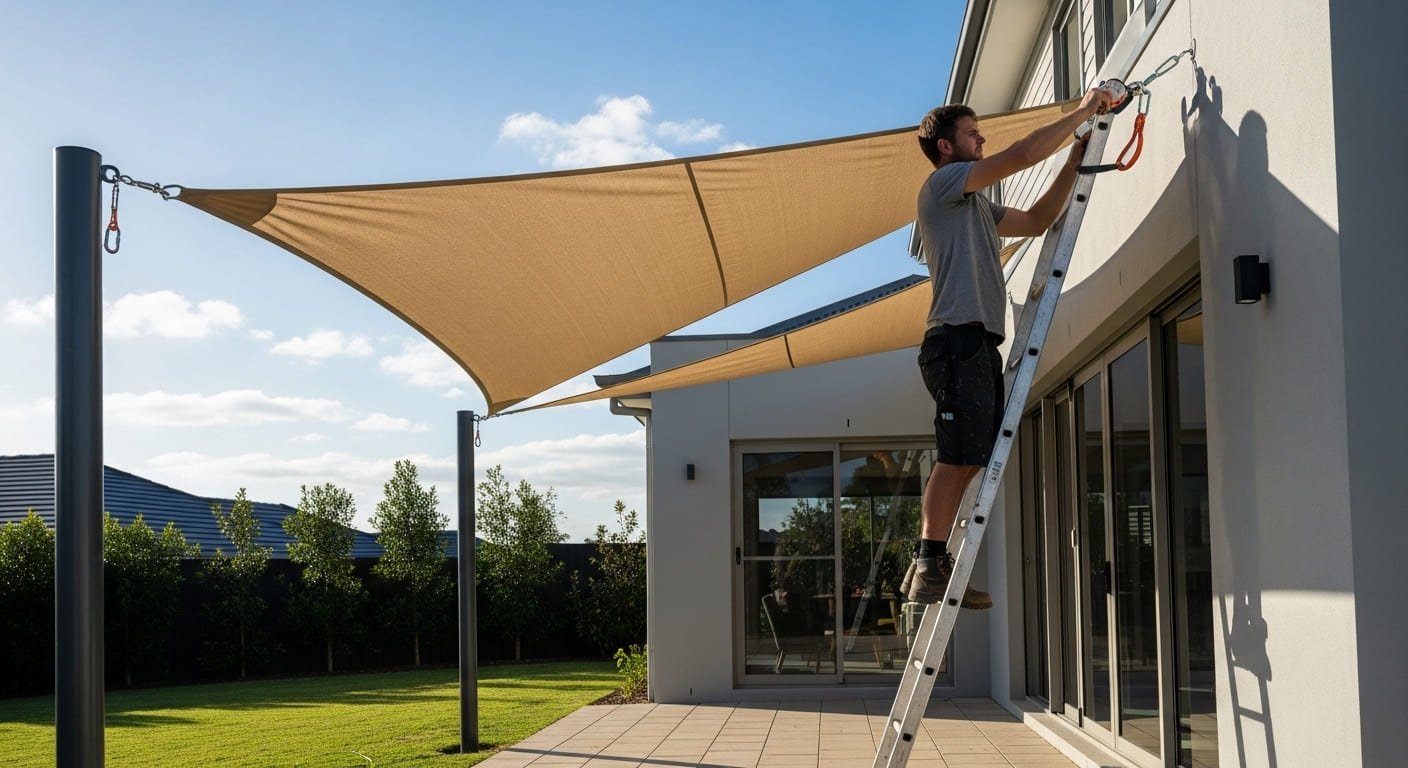
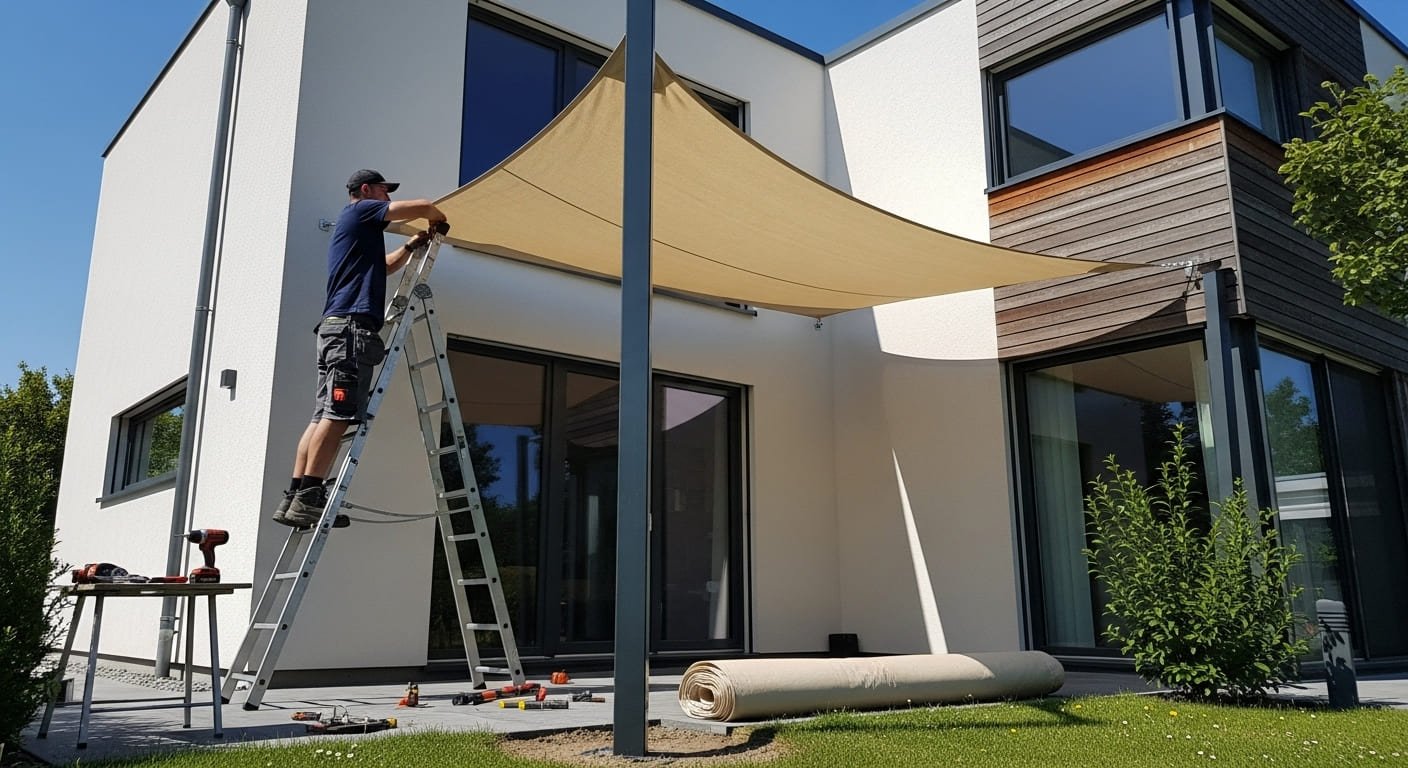
You can tackle a basic one yourself with a kit, but calling in experts for the wires and mounts is smart—safety first, especially in shaky South Australia. Sink posts in concrete, tension with shackles. Stick to AS 4174 for wind-proofing so it doesn’t flop or fly.
Bushfire country? Go non-burny hardware. I watched a crew in Brisbane slope one for water flow, lining up with local drain rules. Labor runs $200-500, but it’s worth the steady result. Area suppliers carry sun-tested gear, trumping stuff shipped in that wilts quick.
Australian Twists: Rules, Examples, and Local Vibes
From city bylaws to remote needs, Australia’s patchwork weather and ways tweak how waterproof shade sails fit in.
Regulations and Staying Compliant
Local councils might want a say on sails bigger than 10 square meters—scope your area’s rules for distance from fences. Queensland coastal jobs need rust-proof bits under build codes. Fire-hot Victoria calls for spark-proof cloths in BAL zones.
Keep privacy in mind; no overhanging the neighbor’s without a yarn. A Perth school sorted council sign-off for playground waterproof shade sails, hitting kid-safe marks. Bring pros in for paperwork—they get the state spins, like New South Wales heritage nods for old houses.
Real-Life Wins Across Australia
Waterproof shade sails pop in all sorts of places. In muggy Cairns, a little eatery slung curved ones over tables, dodging rain and pulling punters for open-air eats—fits our cafe scene to a T. In crisp Hobart, a park sail guarded picnic spots, drawing families to Tasmania’s clean air for lazy days.
On the cultural side, Northern Territory Indigenous groups weave in earth tones for sails, honoring the land. Cheaper rivals exist, but homegrown waterproof shade sails tackle our UV better. A Gold Coast family’s tale: their deck sail flipped rainy Sundays into game nights, mixing beach ease with dry comfort.
Questions and Answers: Common Questions About Waterproof Shade Sails in Australia
Q: How do waterproof shade sails hold up in Melbourne’s rain?
Ans: They shrug off water great, slanted to steer it clear—no puddles hanging around. Melbourne’s misty stuff suits thick fabrics; hook up gutters for big dumps. Pair with ground drains to tick stormwater boxes.
Q: Are waterproof shade sails safe for kids’ play areas in Sydney?
Ans: Spot on, with soft edges and firm holds—they clear AS 4685 play rules. Sydney families swear by the sun block for extended outdoor romps. Grab non-slip bases and check heights for steady toddler steps.
Q: What’s the best material for waterproof shade sails in hot Perth summers?
Ans: Go airy HDPE—it breathes while zapping 95% UV, keeping shade cool past 40°C. Perth’s bone-dry scorch favors pale shades to bounce light. Wind-proof to 120 km/h for those sea blasts.
Q: Do I need permits for installing waterproof shade sails in Brisbane?
Ans: Tiny home ones under 10 square meters? Probably not—but larger means a council DA. Brisbane’s wet zones want water plans. Locals can fast-track it, dodging $1,100 slaps.
Q: How long do waterproof shade sails last in coastal Adelaide?
Ans: Decent ones hit 10 years, fighting salt with steel fittings. Adelaide’s ocean tang calls for yearly pulls to check tautness. UV guarantees fight fade, holding color against southern glare.
Conclusion: Your Path to a Successful Waterproof Shade Sails in Australia
Waterproof shade sails unlock your yard’s potential, mixing shade, waterproofing, and flair that gels with Australia’s sunny spells and sudden wets. We’ve hit the UV guards for well-being, rain smarts for ease, tough builds for bucks, and choices on fits plus setups with nods to coastal tweaks or fire zones. From Melbourne nooks to Perth parks, they slot into our fresh-air passion while heeding bits like AS 4174 and local checks.
To get yours rolling, size your area, grab climate-smart fabrics, and snag a pro estimate with rule runs. Dip a toe with a small one, then grow—tug lines after to stay snug. Waterproof shade sails will brew up cool retreats that amp up the good times and guardrails, so you can grab more of that down-under outdoor buzz.