



Key Takeaways
- Gas ducted heating costs $4,000-$8,000 installed for an average home.
- Running costs are typically 30-50% lower than electric resistance heating.
- Zoning can cut annual gas heating energy use by up to 40%.
- A well-maintained ducted gas system lasts 15-20 years.
- Reverse cycle heat pumps are the closest competitor on efficiency.
What is gas ducted heating and how does it work?
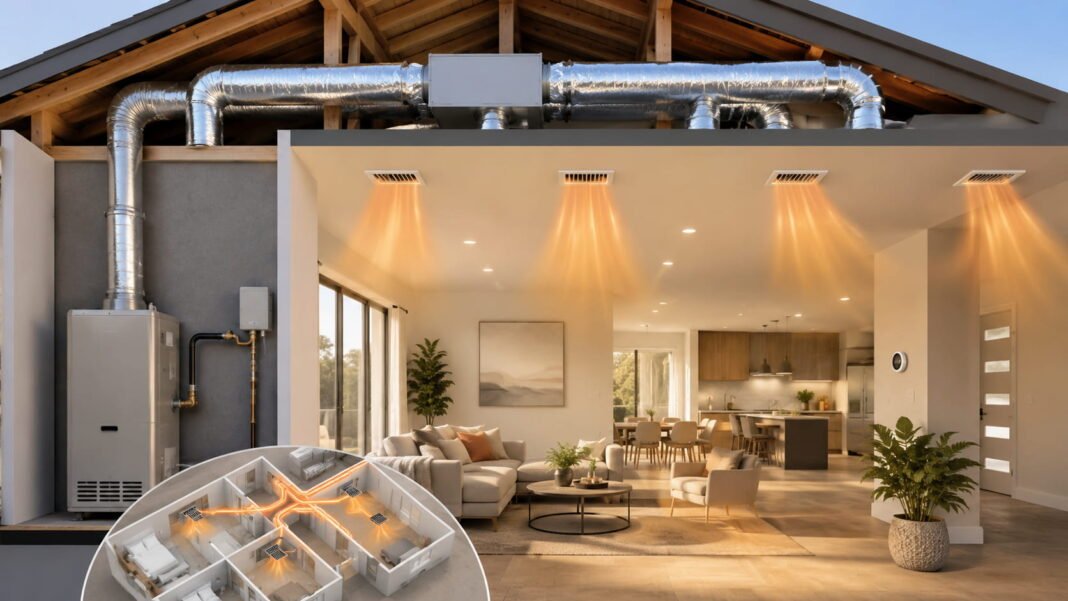
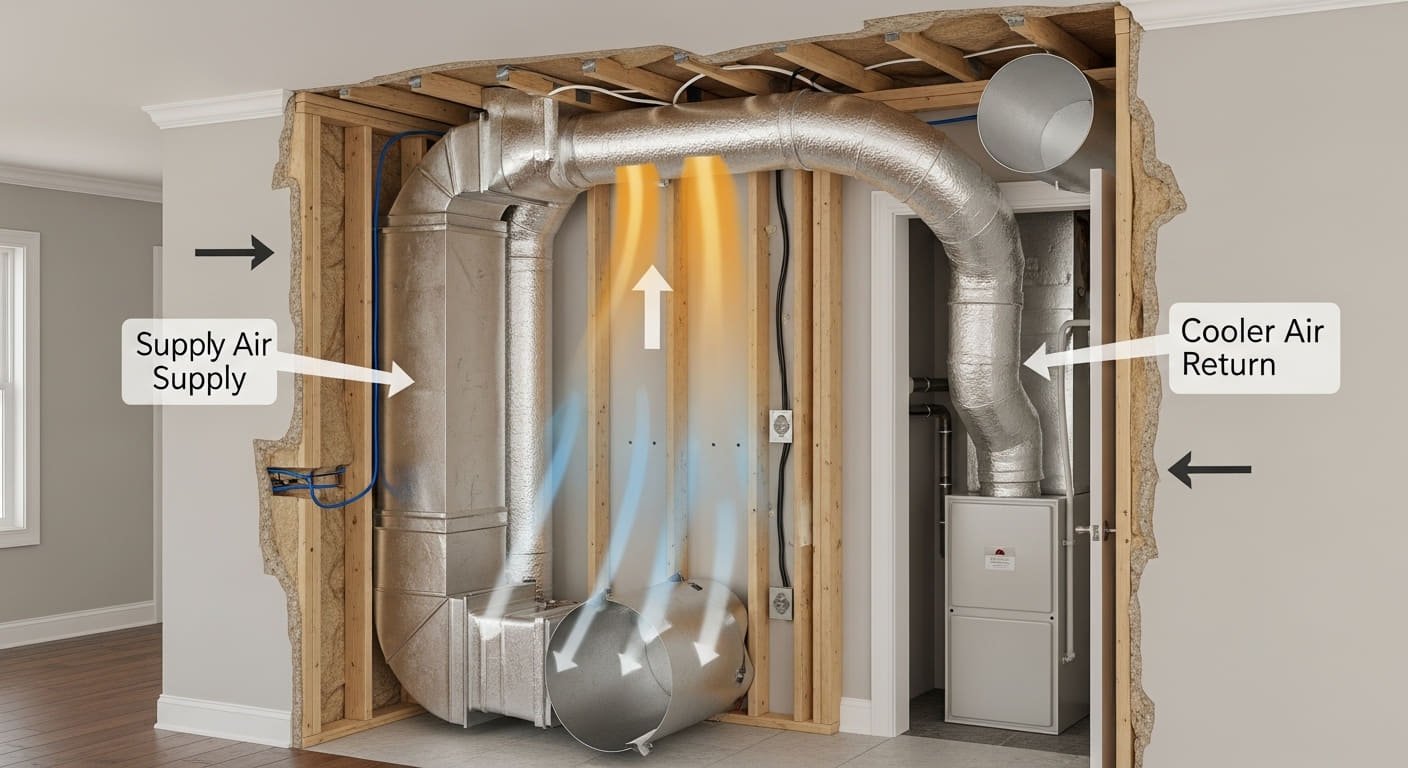
Gas ducted heating is a central heating system that burns natural gas in a single outdoor or indoor unit. A fan pushes the warmed air through a network of insulated ducts, and it enters each room via ceiling or floor vents. The thermostat controls the temperature from a wall-mounted panel or your smartphone app.
Most systems in Australia come from brands like Braemar, Rinnai, and Vulcan. They are popular in colder states such as Victoria and Tasmania because they heat entire homes quickly. The system can also be split into zones, so you only heat the rooms you are using.
How much does gas ducted heating cost in 2026?
Installation costs for gas ducted heating range from $4,000 to $8,000 for a typical three-bedroom home. Larger properties, multi-storey layouts, and high-quality ductwork push the price toward the upper end. You will also pay for a licensed gas fitter, who must install the unit to meet Australian standards. Rebates and government incentives may be available in some states.
Running costs depend on your local gas tariff, the size of your home, and how well it is insulated. According to Canstar Blue’s 2024 analysis, the average household spends roughly $900 to $1,500 per year on gas heating. Prices have risen recently, so locking in a competitive energy plan makes a real difference.
Gas ducted heating vs reverse cycle: which is better?
Reverse cycle air conditioners are the main alternative to gas ducted heating. They use electricity to move heat rather than generate it, which makes them highly efficient. However, gas systems often feel warmer because they produce hotter air at the vent, and they heat rooms faster.
Upfront, reverse cycle systems cost slightly more to install, but their running costs are comparable or lower depending on electricity tariffs. Environmentally, reverse cycle wins when powered by renewable energy. For homes already connected to the gas network, ducted gas remains a strong value choice, especially in cold climates where it runs frequently.
How to read gas heater efficiency ratings
Every gas ducted heater sold in Australia carries an energy rating label. The label shows a star rating from one to six, where more stars mean better efficiency. It also lists the annual gas consumption in megajoules, which lets you compare models directly.
A higher star rating usually costs more upfront but saves money over the heater’s 15-20 year life. Look for a model with at least four stars for the best balance of price and performance. Cheaper three-star units can cost hundreds more per year to run.
Gas ducted heating maintenance and safety tips
Annual servicing by a licensed technician is essential for gas ducted heaters. The technician checks the burner, heat exchanger, and flue for blockages or leaks. Carbon monoxide poisoning is rare but possible if a unit is faulty, so a yearly inspection protects your family.
You can extend the system’s life by vacuuming supply vents and checking that nothing blocks the airflow. Replace the air filter every 12 months, and keep the outdoor unit clear of leaves and debris. Small habits like these prevent breakdowns in the middle of winter.
Gas ducted heating vs alternatives: 2026 comparison
| Feature | Gas Ducted | Reverse Cycle | Hydronic | Electric Panel |
|---|---|---|---|---|
| Upfront cost | $4,000-$8,000 | $5,000-$10,000 | $8,000-$15,000 | $200-$800 |
| Running cost | Low-medium | Low | Medium | High |
| Heat delivery | Warm, instant | Warm, slower | Radiant, even | Localised |
| Lifespan | 15-20 years | 12-15 years | 25+ years | 10-15 years |
| Best for | Whole-home comfort | Efficient whole-home | Premium comfort | Single rooms |
Step-by-Step Guide
- Measure your home’s heated floor area in square metres.
- Calculate the required heating capacity in kilowatts using an online calculator.
- Get written quotes from at least three licensed gas heating installers.
- Compare the star ratings and annual gas consumption of each quoted model.
- Ask about zoning options to reduce running costs in rooms you rarely use.
- Schedule an annual service before winter begins to avoid breakdowns.
- Review your gas plan annually and switch suppliers if you find a cheaper rate.
By the Numbers
- $4,000-$8,000 — Typical installed cost of a gas ducted heating system for a three-bedroom Australian home. (Source: Canstar Blue, 2024)
- 40% — Potential reduction in gas heating energy use when zoning is used in larger homes. (Source: CSIRO, 2023)
- 15-20 years — Average lifespan of a well-maintained gas ducted heating system. (Source: Choice, 2024)
- 30-50% — Typical savings on running costs compared with electric resistance heating. (Source: Sustainability Victoria, 2023)
Frequently Asked Questions
Is gas ducted heating expensive to run?
Running costs depend on gas prices, home size, and insulation. Most Australian households spend $900 to $1,500 per year on gas heating. Proper zoning and a high star-rated system can significantly lower this amount.
How long does a gas ducted heating system last?
With annual servicing, a gas ducted heating system typically lasts 15 to 20 years. Neglecting maintenance can shorten its life and increase running costs. Replacing an old unit with a high-efficiency model often pays for itself.
Can you add zoning to an existing gas ducted system?
Yes, most modern gas ducted systems support zoning. A technician can install motorised dampers in the ductwork to control airflow to individual rooms. This usually costs $800 to $2,000 and can cut energy use by up to 40%.
Is gas ducted heating better than reverse cycle?
It depends on your priorities. Gas heats faster and feels warmer, while reverse cycle is more energy-efficient and can also cool your home. If you already have a gas connection, ducted gas is often the more economical choice.
How often should a gas ducted heater be serviced?
Have your gas ducted heater serviced once a year by a licensed technician. Annual servicing checks for gas leaks, carbon monoxide risks, and worn parts. This keeps the system safe, efficient, and covered under warranty.
Does gas ducted heating dry out the air?
Gas combustion produces some moisture, so ducted gas heating is less drying than electric heaters. However, any heating system can reduce indoor humidity. Using a humidifier or placing water bowls in rooms helps maintain comfortable moisture levels.
The Bottom Line
Gas ducted heating remains one of the most effective ways to warm an entire home, especially in Australia’s colder regions. With installation costs between $4,000 and $8,000 and running costs that beat electric systems, it offers strong long-term value. The key is choosing a high-efficiency model, adding zoning, and servicing it annually. As gas prices fluctuate, pairing your heater with good insulation and a competitive energy plan will keep your bills in check for years to come.