


First off, if you keep asking Why does my house smell musty, you’re probably dealing with hidden moisture — From what I’ve seen in Manchester flats to old terraced houses in Hackney, the culprit is almost always damp. The musty odour isn’t just a nuisance – it can signal mould growth, poor ventilation, or a failing damp‑proof course. Below you’ll find the science, the DIY checks, and the professional routes that will get the smell out for good.
Why does my house smell musty? – Understanding the science behind the odour
In my experience, a musty smell is a sign that water is hanging around where it shouldn’t. When warm, moist indoor air meets a cold surface – a window in a Liverpool kitchen or an external wall in a Leeds semi‑detached – condensation forms — That moisture settles on plaster, timber, or brick, creating the perfect breeding ground for mould. The spores release volatile organic compounds (VOCs) that our noses pick up as that characteristic “old cellar” scent.
- Humidity levels above 60 % are a red flag.
- Temperature differentials of more than 5 °C between inside and outside accelerate condensation.
- Stagnant air prevents evaporation, letting the damp linger.
And that’s why you often notice the smell after a spell of rain in Brighton or when a new heating system kicks in during the winter months. The key is to break the cycle of moisture, temperature, & stagnant air.

How to pinpoint the source – Step‑by‑step moisture testing
Before you splash any money on a dehumidifier, you need to locate the wet spots. Here’s a quick, no‑specialist method that works in a typical UK home, whether it’s a Victorian terrace in Glasgow or a modern flat in Croydon.
- Visual inspection: Look for water stains, peeling paint, or bubbling plaster.
- Moisture meter: Run a handheld meter across walls and floors. Readings above 15 % on plaster or 20 % on timber suggest a problem.
- Salt test: Tape a small dish of table salt to the suspect area for 24 hours. If the salt clumps, moisture is present.
- Condensation test: Place a clear glass of water on a cold surface for an hour. To be honest, if droplets form on the glass, the surface is below the dew point.
And if you find a spot that’s consistently wet, mark it for a deeper look – it could be a hidden pipe leak, a faulty external wall insulation, or a breach in the damp‑proof course.
Common hidden spots in UK homes that breed a musty odour —
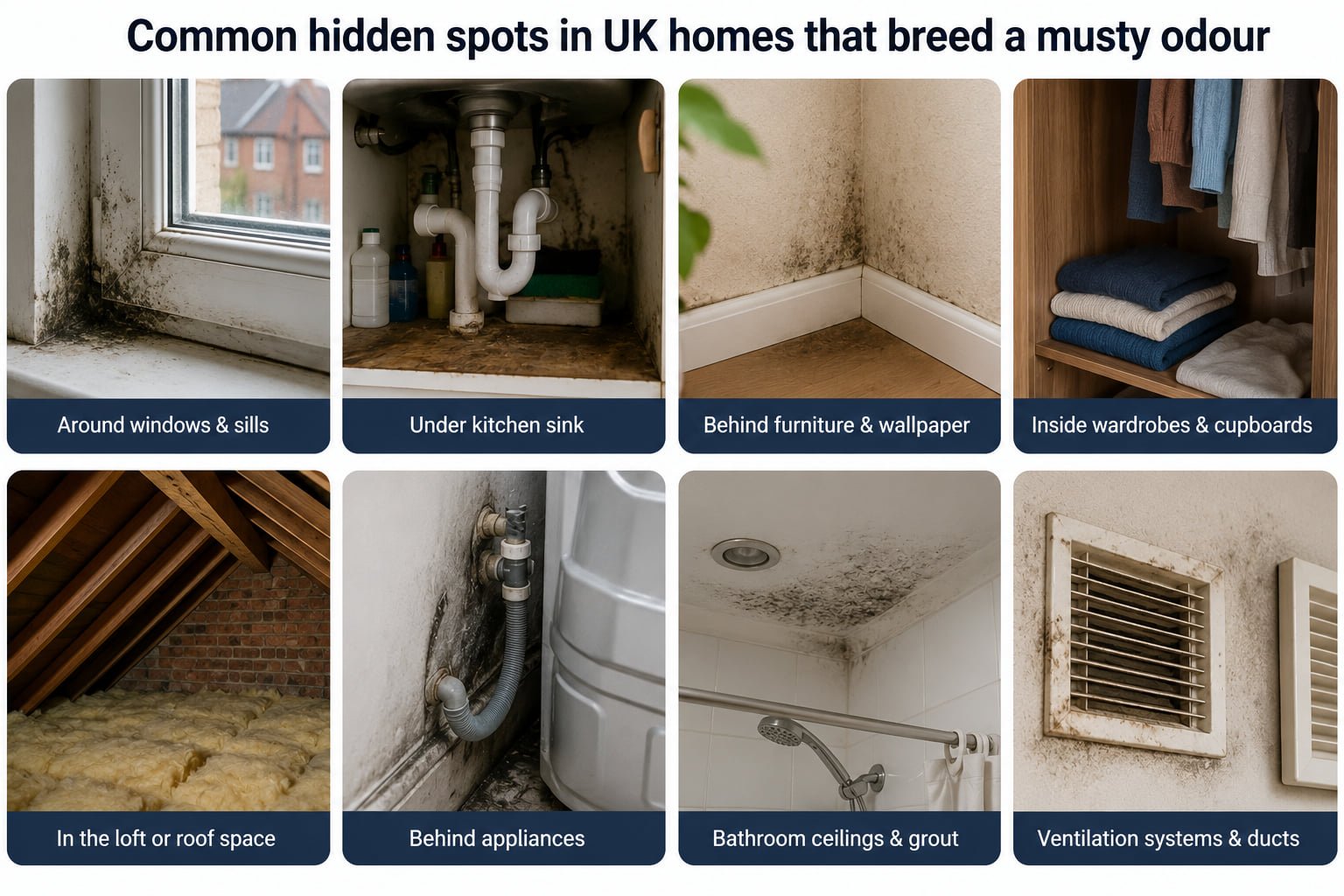
Most homeowners overlook the places where moisture loves to hide — Like, in older homes across the uk, the following areas are prime suspects.
- Crawl spaces and under‑floor voids: In a 1930s house in Bristol, moisture can rise from the ground and collect under the floorboards.
- Behind wall cavities: Poorly sealed external walls in a Manchester terraced house can let rainwater seep in.
- Plumbing leaks: A burst pipe behind a kitchen wall in a Leeds bungalow can go unnoticed for months.
- Roof & loft insulation: Condensation on cold roof trusses is common in Edinburgh flats with inadequate ventilation.
But it’s not just the structure. Indoor plants, pet areas, and even a pile of wet laundry in a shared bathroom can push indoor humidity over the safe limit.
Quick DIY fixes you can do today to banish the musty odour —
When you need an immediate remedy, start with the low‑cost, high‑impact actions that work across the UK.
- Increase ventilation: Open windows for 10‑15 minutes each morning — Install extractor fans in kitchens and bathrooms – a 30 mm fan in a London flat can cut humidity by up to 30 %.
- Use a dehumidifier: Portable units rated for 20 L/day are ideal for a three‑bedroom house in Birmingham. Um, expect to run them 8‑12 hours a day during damp periods.
- DIY absorbents: Place bowls of activated charcoal, silica gel packs, or baking soda in problem areas. They work best in small rooms like a London studio.
- Seal drafts: Apply weather‑stripping around doors and windows in a Newcastle terraced house to stop cold air intrusion.
And if the smell persists after a week, it’s time to consider a more thorough treatment.

Professional routes – When to call a damp‑proofing specialist
Not every musty odour can be tackled with a fan and a charcoal bag. In many cases, you’ll need a licensed professional who can certify the work — Look for a company that holds a NHBC Or BSI Accreditation, and make sure the technician is on the Gas Safe Register If they’ll be handling boiler‑related ventilation.
- Survey and report: A full damp survey costs between £250–£500 in 2026. It includes moisture readings, thermal imaging, and a written remediation plan.
- Professional treatment: Options range from chemical damp‑proofing (£1,200–£3,500) to installing a breathable plaster system (£2,000–£4,000).
- Whole‑house ventilation system: HRV/ERV units, priced £500–£1,200, provide continuous air exchange without losing heat.
But don’t forget the importance of a written guarantee – most reputable firms will offer a 5‑year warranty on their work, backed by a CIBSE Standard.
Long‑term maintenance plan – Keep the musty odour at bay year after year —
Even after the initial fix, you’ll need a routine to prevent re‑occurrence. Here’s a seasonal checklist that works for a typical UK home.
- Spring: Check roof gutters & downpipes for blockages. Test ventilation fans for proper operation.
- Summer: Run a dehumidifier during heat‑wave nights when indoor humidity spikes.
- Autumn: Inspect external walls for cracks after heavy rain. Re‑seal any gaps.
- Winter: Monitor indoor humidity with a digital hygrometer; aim for 40‑55 %.
And once a year, consider a radon test – it’s odorless but can be a hidden health risk, especially in older properties in Cornwall or Kent.
Comparison of treatment options
| Option | Cost (2026) | Typical time 2 complete | Best for |
|---|---|---|---|
| DIY Moisture‑Absorbing Kit | £250‑£400 | 1‑2 days | Small flats, quick fix |
| Professional Damp‑Proofing (chemical injection) | £1,200‑£3,500 | 3‑5 days | Terraced houses, high‑risk walls |
| Whole‑House HRV/ERV Ventilation System | £500‑£1,200 | 2‑3 days (install) | New builds, major renovations |
Case study – Turning a musty flat in Hackney into a fresh‑living space
Emma, a young professional living in a two‑bedroom flat on Kingsland Road, started noticing a stale, mouldy smell after a wet winter. She ran a moisture meter and found 18 % reading on the external wall behind the kitchen. A quick visual check revealed a small leak from a pipe that had burst behind the drywall during a recent DIY kitchen install.
Ready to get your kitchen up and running? Follow these steps—quick, practical, and totally doable.
She hired a Gas Safe registered plumber, John Smith, who repaired the pipe & sealed the wall. Next, a certified damp‑proofing contractor performed a chemical injection treatment, costing £2,300. To finish the job, Emma installed a 30 mm extractor fan and a portable dehumidifier for the first two weeks.
Within three weeks, the musty odour was gone, humidity levels dropped to 45 %, and a post‑treatment moisture test showed readings under 10 % across the flat. Emma’s landlord now has a 5‑year guarantee from the contractor, & the flat’s indoor air quality meets the CIBSE Standards for healthy living.
Frequently Asked Questions
Q1: Can I just use scented candles to mask a musty smell?
No. Scented candles only hide the odour; they don’t address the underlying moisture. In fact, some candles can add pollutants to the air.
Q2: How long does it take for a professional damp‑proofing job to finish?
Typical projects wrap up in 3‑5 days, depending on the size of the property and the method used.
Q3: Is a dehumidifier enough for a large Victorian house?
For a whole‑house solution, a single portable unit isn’t enough. You’ll need a whole‑house ventilation system or multiple units placed strategically.
Q4: What health risks are linked to a musty odour?
Persistent exposure can trigger asthma, allergic reactions, and in severe cases, respiratory infections. The NHS recommends keeping indoor humidity below 60 % to minimise mould growth.
Q5: Do I need a building regulation survey before fixing damp?
While not always mandatory a survey that follows BS 8215 (Damp‑Proofing) & Part G Of the Building Regulations ensures the work meets legal standards.
Bottom line – Take action now stay ahead of the damp…
Understanding Why does my house smell musty Is the first step. Use the moisture‑testing methods, address hidden sources, and don’t shy away from a professional damp‑proofing survey if the problem is extensive. With the right ventilation, a bit of DIY absorbent work, and a solid maintenance schedule, you’ll keep your home fresh and healthy for years to come.