


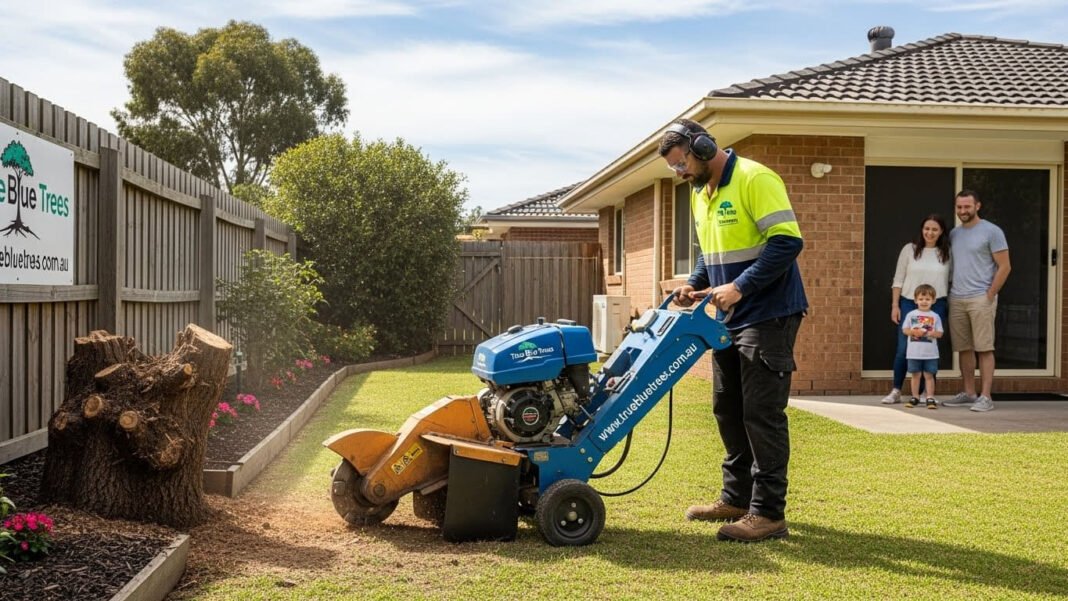
When a tree comes down in your backyard, the job often feels finished. The branches are chipped, the logs are carted away, and the sunlight is finally hitting that patch of grass again. However, looking at the ground, you are left with one final, stubborn obstacle: the stump. Many Australian homeowners fall into the trap of thinking they can simply leave it there to rot away naturally. Unfortunately, this “she’ll be right” attitude can lead to significant headaches down the track.
A leftover stump is more than just an eyesore that ruins the flow of your garden; it is a potential biological time bomb and a physical hazard. Whether you have removed a massive Gum tree that was threatening your roof or a sick palm tree from the pool area, completing the job with professional stump removal is the only way to truly reclaim your space.
Leaving a stump in the ground can attract unwanted pests, create tripping hazards for children and the elderly, and damage your lawnmowing equipment. Furthermore, in the context of Australian landscaping, where we value our outdoor living areas highly, a rotting stump prevents you from fully utilizing your property. This guide explores why getting that wood out of the ground is critical for the health, safety, and beauty of your home.
The Hidden Dangers of Leaving a Stump
It is easy to ignore a stump when it is tucked away in a garden bed, but when it sits in the middle of a lawn, the risks are immediate. The most obvious issue is safety. Stumps are often cut a few inches above the ground, making them the perfect height to catch a toe. In the long grass, they become invisible stumbling blocks. For families with children running around playing cricket or footy in the backyard, a hard piece of wood hidden in the grass is a recipe for injury.
The Threat of Termites and Pests
In Australia, the biggest threat lurking in a dead stump is the termite. We often call them “white ants.” These pests play a natural role in the bush by breaking down dead timber, but in suburbia, you do not want to attract them. A decaying stump acts as a beacon for termites. It provides a perfect nesting ground with moisture and food.
Once a termite colony establishes itself in an old stump, the workers will begin looking for new food sources. If that stump is close to your house, garage, or fence, those structures become the next target. Professional stump removal eliminates this food source, reducing the risk of a termite infestation spreading to your most valuable asset.
Beyond termites, rotting stumps attract other pests. They can house beetles, ants, and even snakes looking for a dry place to hide. Fungi and diseases can also thrive on the decaying wood, which can then spread to the healthy plants and trees nearby, compromising your entire garden.
Equipment Damage
Anyone who has mowed a lawn around a tree stump knows the frustration. You have to navigate carefully, and if you misjudge the distance, your mower blade hits the hard wood or an exposed root. This can bend the crankshaft of your mower or shatter the blade, leading to expensive repairs. By investing in stump removal, you create a smooth, level surface that makes lawn maintenance a breeze.
Reclaiming Your Australian Backyard
Space is a premium commodity, especially in urban areas like Sydney, Melbourne, and Brisbane. A stump takes up valuable real estate. You cannot pave over it, you cannot deck over it, and you certainly cannot plant a new tree on top of it.
If you are planning a landscaping project, the stump has to go. Perhaps you want to install a garden shed, lay a concrete slab, or build a retaining wall. If the stump is left in the ground, the wood will eventually rot and collapse, causing the ground to sink. This subsidence can crack concrete and destabilize foundations.
Removing the stump allows you to start with a clean slate. It gives you the freedom to redesign your garden without working around an old, ugly obstacle. You can lay fresh turf for a seamless green lawn or plant a more suitable native tree that fits your current lifestyle.
Understanding the Removal Process: Grinding vs. Digging
When people think of removing a stump, they often imagine digging it out with a shovel and a mattock. For a small shrub, this might work. For an established tree, however, the root ball can be massive and heavy.
The most efficient and common method used by professionals is stump grinding. This involves a specialized machine with a heavy-duty cutting wheel lined with tungsten teeth. The machine is positioned over the stump, and the wheel spins at high speed, grinding the wood into small chips.
How Grinding Works
The grinder works its way back and forth, shaving the stump down inch by inch. Crucially, it does not just cut it flush with the ground; it grinds well below the surface level. This effectively severs the root system from the trunk. The result is a hole filled with a mixture of soil and wood chips (mulch). Over time, the remaining roots in the ground will die off and decompose naturally without causing issues.
This method is far less invasive than using an excavator to rip the whole root ball out, which can destroy your surrounding garden and leave a massive crater that needs filling. Stump removal via grinding is surgical, quick, and leaves your garden tidy.
Dealing with Difficult Australian Roots
Australian trees are known for being tough. Species like Ironbark, Box, and Red Gum have incredibly dense wood that can blunt inferior tools. Furthermore, their root systems are extensive.
Some trees are prone to “suckering.” This happens when the tree is cut down, but the roots remain alive. The tree tries to survive by sending up shoots (suckers) from the roots, often meters away from the original stump. Species like Robinias, Poplars, and some Eucalypts are notorious for this.
If you only cut the tree down and leave the stump, you might find yourself fighting a losing battle against these shoots for years. In these cases, stump removal needs to be thorough. Sometimes, it is paired with herbicide treatment immediately after the tree is felled to ensure the root system dies completely before the grinding takes place.
Palm trees present a different challenge. Their root balls are fibrous and massive, often holding a lot of sand and grit. A professional operator knows how to adjust their technique to handle the fibrous nature of palms without stalling the machine.
Important Considerations Before You Start
Before you decide to tackle a stump, there are critical factors to consider. The ground beneath our feet is filled with essential services.
Dial Before You Dig
In Australia, it is vital to check for underground assets. Gas pipes, water mains, electricity cables, and NBN lines often run through front yards and nature strips. Tree roots often grow around these pipes. If you blindly start digging or grinding, you risk hitting a utility line. This is dangerous and can lead to massive repair bills. Professional stump removal providers like True Blue Trees always assess the site and, if necessary, consult utility maps to ensure the work is done safely.
Access Issues
Stump grinders come in various sizes. There are large tow-behind units for massive stumps in open areas, and smaller, self-propelled machines designed to fit through a standard pedestrian gate. When you book a service, measuring the width of your gate or access path helps the team bring the right machine for the job.
The DIY Dilemma
You might see stump grinders available for rent at your local hardware store. While the DIY route is tempting, it is often fraught with difficulty. Rental machines are usually underpowered compared to commercial units. A stump that takes a professional twenty minutes to grind might take a homeowner all day with a rental machine.
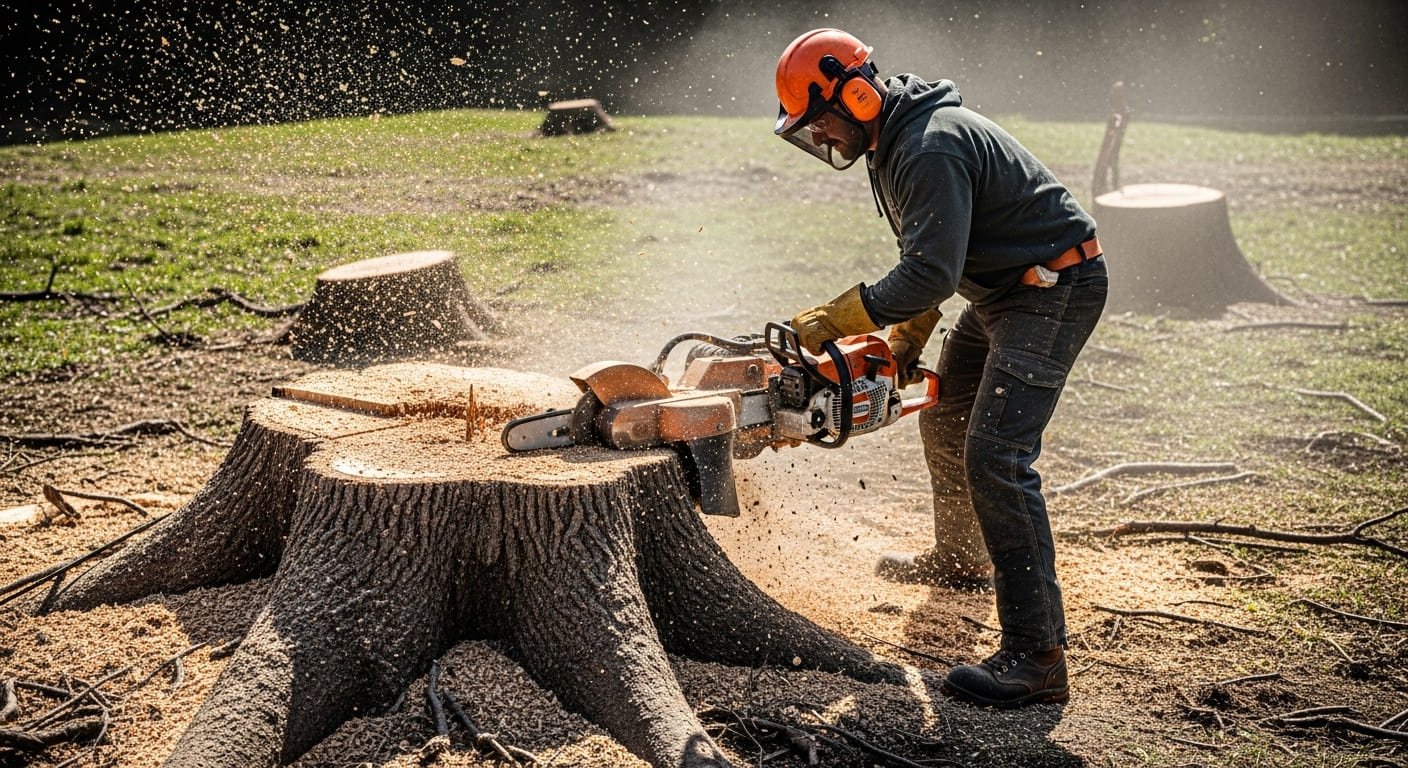
Furthermore, these machines are dangerous. They throw wood chips and rocks at high velocity. Without the proper safety gear—chainsaw trousers, face shields, and steel-capped boots—and the experience to operate the machine, the risk of injury is high. The teeth on the cutter wheel can also be expensive to replace if you hit a rock. For most Australians, the cost of hire, the time investment, and the physical effort make professional stump removal the more economical and safer choice.
Questions and Answers: Common Questions About Stump Removal in Australia
Q: Can I just poison the stump and wait for it to rot?
A: You can, but it is a very slow process. Using products like Blackberry killer or heavy-duty herbicides might kill the roots, but the physical stump will take years, sometimes decades, to break down, especially with Australian hardwoods. During that time, it remains a termite risk and an eyesore. Mechanical stump removal is the only way to get immediate results.
Q: Will the tree grow back after the stump is ground out?
A: In most cases, no. Grinding the stump below ground level separates the trunk from the roots, which usually kills the tree entirely. However, aggressive species like some Willow or Poplar trees may send up suckers from remaining roots. Your arborist can advise if a specific tree needs chemical treatment in addition to grinding to prevent this.
Q: What happens to the hole left behind?
A: After grinding, you will be left with a mix of wood mulch and dirt. We typically use this mixture to backfill the hole. Over a few weeks, this mound will settle. If you plan to turf over the area immediately, it is best to remove some of the wood mulch and replace it with clean topsoil, as fresh wood chips can draw nitrogen from the soil and affect grass growth.
Q: How deep do you grind the stump?
A: The standard depth for stump removal is usually 150mm to 300mm below ground level. This is sufficient to cover the area with turf or a garden bed. If you plan to replant a new tree in the exact same spot or build a structure with deep footings, let us know, as we may need to grind deeper to remove the main root ball entirely.
Q: Is stump grinding messy?
A: It creates a lot of wood chips. However, professional operators use screens and shields to contain the debris and prevent it from flying into windows or parked cars. Once the job is done, the excess mulch is raked back into the hole or removed from the site depending on your preference.
Conclusion: Your Path to a Successful Stump Removal in Australia
A garden is a place for relaxation and enjoyment, not a graveyard for old trees. Leaving a stump in the ground compromises the safety of your family, invites destructive pests like termites, and limits what you can do with your land. It is an unfinished job that detracts from the value and beauty of your property.