

Have you ever walked into your home on a scorching summer day, only to find your air conditioner struggling to keep up? Or perhaps you’ve opened your energy bill and nearly fallen off your chair at the shocking amount? What if the secret to both problems lies not in your air conditioning unit itself, but in how it was installed?
Getting your air conditioning installation right from the start makes all the difference to your comfort and your wallet. A poorly installed system can work overtime, chew through electricity, and still leave you sweating. On the flip side, a well-planned installation delivers consistent cooling, lower running costs, and a system that lasts for years.
In this guide, we’ll walk you through everything you need to know about air conditioning installation. From choosing the right system for your home to avoiding common mistakes, you’ll discover practical tips that help you stay cool without burning a hole in your budget. Whether you’re installing your first unit or upgrading an existing system, these insights will set you up for success.
Choosing the Right Air Conditioning System for Your Home
Split System vs Ducted Air Conditioning: Which Is Right for You?
When it comes to selecting an air conditioner, you’ve got two main options: split systems and ducted air conditioning. Split systems are brilliant for cooling individual rooms or open-plan living areas. They’re more affordable upfront and easier to install, making them popular for apartments and smaller homes.
Ducted systems, however, cool your entire home through a network of vents and ducts hidden in your ceiling. They’re ideal for larger properties where you want consistent temperatures throughout. The catch? They cost more to install and require adequate ceiling space.
Think about your lifestyle and how you use your home. If you spend most of your time in one or two rooms, a split system might be perfect. But if you’ve got a growing family spread across multiple spaces, ducted could be worth the investment.
What Size Air Conditioner Do I Need for My Room?
Getting the size right is absolutely key. Too small, and your unit will struggle to cool the space, running constantly and driving up your bills. Too large, and it’ll cycle on and off too frequently, creating humidity issues and uneven temperatures.
As a rough guide, you’ll need about 120-150 watts of cooling capacity per square metre. So a 20-square-metre room typically needs a 2.5kW unit. However, factors like ceiling height, window size, insulation quality, and which direction your room faces all affect this calculation.
Your best bet is getting a professional assessment. A qualified installer can measure your space and consider all variables to recommend the ideal size for your needs.
Understanding Energy Ratings and What They Mean for Your Bills
Those star ratings on air conditioners aren’t just for show—they directly impact how much you’ll pay to run your system. The more stars, the more energy-efficient the unit. A higher-rated system might cost more upfront, but it’ll save you money over its lifetime.
Look for both cooling and heating star ratings if you plan to use your system year-round. Also pay attention to the zoned energy rating label (ZERL), which shows efficiency based on Australian climate zones. Choosing a unit suited to your location makes a real difference to performance and running costs.
Planning Your Air Conditioning Installation
Best Location to Install an Air Conditioner in Your Home
Where you place your air conditioner matters more than you might think. For indoor units, aim for a central location on an interior wall where air can circulate freely. Avoid spots near heat sources like TVs, lamps, or sunny windows, as these can trick the thermostat.
The outdoor unit needs good airflow too. Keep it away from direct sunlight if possible and make sure there’s at least 50cm of clearance around it. Placing it on the southern side of your home often works well in Australia, as it gets less direct sun exposure.
Does Air Conditioner Placement Affect Efficiency?
Absolutely! Poor placement can reduce your system’s efficiency by up to 25%. If the indoor unit blows directly onto furniture or walls, the cooled air can’t circulate properly. Similarly, an outdoor unit tucked into a cramped corner will overheat and work harder.
Think about airflow patterns in your room. You want the cool air to reach living areas naturally, not fight against obstacles. Taking time to plan placement properly pays dividends in comfort and energy savings.
Key Considerations for Multi-Storey Homes
Heat rises, which means cooling a two-storey home presents unique challenges. Upstairs rooms typically need more cooling capacity, while downstairs areas stay naturally cooler. A zoned ducted system works brilliantly here, letting you direct cooling where it’s needed most.
Consider installing separate split systems for each level if ducted isn’t an option. This gives you independent control and prevents the ground floor from becoming an icebox while you try to cool bedrooms upstairs.
Professional Installation vs DIY: What You Need to Know
Why You Should Always Use a Licensed Installer
In Australia, it’s actually illegal to install your own split system air conditioner. The refrigerant handling alone requires a specific licence, and electrical work must be completed by a qualified electrician. Beyond legality, professional installers bring expertise that protects your investment.
A licensed installer will size your system correctly, position units optimally, and guarantee their work meets Australian standards. They’ll also handle warranty registration, which typically requires professional installation to remain valid.
How Much Does Air Conditioning Installation Cost?
Installation costs vary depending on your system type and home setup. For split systems, expect to pay between $600 and $2,500 for installation, with the unit itself ranging from $500 to $3,000. Ducted systems cost significantly more—anywhere from $5,000 to $15,000 or higher for supply and installation.
Get multiple quotes and check what’s included. Some installers bundle everything while others charge extra for electrical work, brackets, or piping extensions. Cheaper quotes aren’t always better if they skimp on quality or service.
What to Expect During the Installation Process
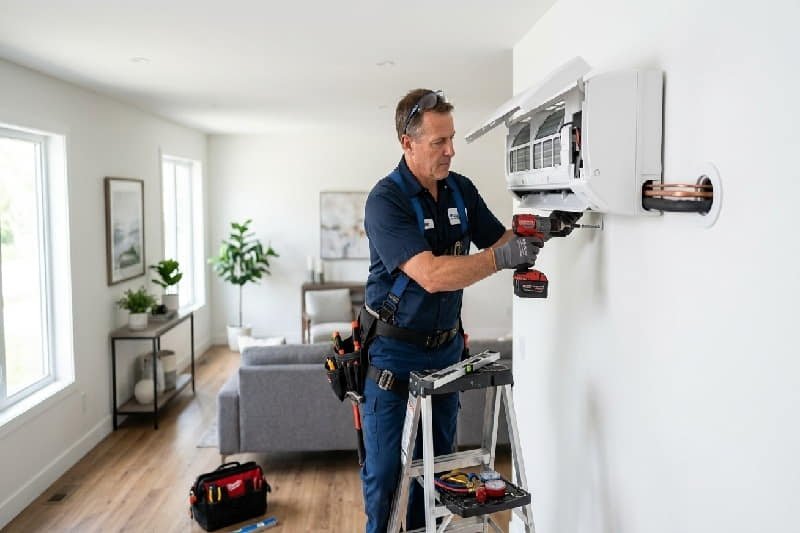
A typical split system installation takes between two and six hours. The installer will mount the indoor unit, position the outdoor unit, connect refrigerant lines, and complete electrical work. They should also test the system and walk you through how to use it.
For ducted systems, installation usually takes two to three days. This involves significant ceiling work, so expect some disruption. Good installers clean up after themselves and leave your home neat and tidy.
Maximising Energy Efficiency from Day One
How Can I Reduce My Air Conditioning Energy Bills?
Start by using your system wisely. Every degree cooler you set the temperature increases energy consumption by about 5-10%. Closing doors and windows while running your AC prevents cool air from escaping. Using ceiling fans alongside your air conditioner lets you set a higher temperature while still feeling comfortable.
Programmable timers and smart controls help too. Set your system to switch on shortly before you arrive home rather than running all day. Many modern units offer Wi-Fi control, letting you adjust settings from your phone.
Optimal Temperature Settings for Comfort and Savings
For the best balance of comfort and efficiency, aim for 24-26°C in summer. This range keeps most people comfortable without overworking your system. At night, you can often raise this slightly since your body naturally cools during sleep.
Resist the temptation to crank the temperature down to 18°C thinking it’ll cool faster—it won’t. Your system works at the same rate regardless of the setting. All you’ll achieve is an unnecessarily cold room and a bigger bill.
The Role of Insulation and Sealing in AC Performance
Your air conditioner doesn’t work in isolation. Poor insulation lets cool air escape through walls, ceilings, and floors. Gaps around doors and windows create draughts that make your system work harder. Before installing air conditioning, consider addressing these issues first.
Ceiling insulation is particularly important in Australian homes. Adding or upgrading insulation can reduce your cooling needs by up to 45%. Weather sealing around doors and windows is a cheap and easy improvement that delivers noticeable results.
Common Air Conditioning Installation Mistakes to Avoid
Incorrect Sizing and Why It Costs You More
Oversized and undersized systems both cause problems. An oversized unit short-cycles, turning on and off frequently. This wastes energy, causes wear on components, and leaves humidity levels uncomfortable. Undersized units run constantly, struggling to reach the set temperature and driving up electricity costs.
Always get a proper load calculation rather than guessing or relying on generic recommendations. Professional sizing considers your home’s unique characteristics for optimal results.
Poor Placement and Airflow Issues
Installing the indoor unit above a door or in a cramped corner restricts airflow and reduces efficiency. Placing outdoor units on sun-drenched walls or surrounded by plants creates overheating problems. These mistakes are easily avoided with proper planning.
Walk through your space with your installer and discuss placement options before committing. A good professional will explain why certain positions work better than others.
Skipping Professional Assessments
Some homeowners skip professional consultations to save money, choosing systems based on price alone. This often backfires when the unit doesn’t perform as expected. A professional assessment costs little but provides valuable insights about your cooling needs.
Maintaining Your System for Long-Term Performance
How Often Should You Service Your Air Conditioner?
Professional service every 12 months keeps your system running efficiently. Technicians clean coils, check refrigerant levels, inspect electrical connections, and identify potential issues before they become expensive repairs. Regular servicing can extend your system’s lifespan by several years.
Simple Maintenance Tips Between Professional Services
Clean or replace filters every one to three months—dirty filters restrict airflow and reduce efficiency significantly. Keep the outdoor unit clear of leaves, debris, and overgrown plants. Wipe down indoor unit vents occasionally to prevent dust buildup affecting air quality.
Investing in Comfort and Savings
Getting your air conditioning installation right sets you up for years of comfortable, efficient cooling. From choosing the appropriate system to positioning units correctly and avoiding common mistakes, each decision impacts your daily comfort and ongoing costs.
The key takeaways? Always work with licensed professionals, invest time in proper planning, and don’t cut corners on sizing or placement. These upfront considerations pay for themselves through lower energy bills and a system that performs reliably year after year.
Before committing to any system, it’s worth taking the time to research your options properly. Homeowners looking for reliable air conditioning installation in Hobart will find that choosing a locally experienced installer — someone who understands Hobart’s unique climate and building styles — makes a significant difference in long-term performance and efficiency.
So don’t rush into buying the cheapest unit or hiring the first installer you find. Take a step back and consider the bigger picture. Your future self — comfortably cool and happily checking reasonable energy bills — will thank you for making smart choices today.